
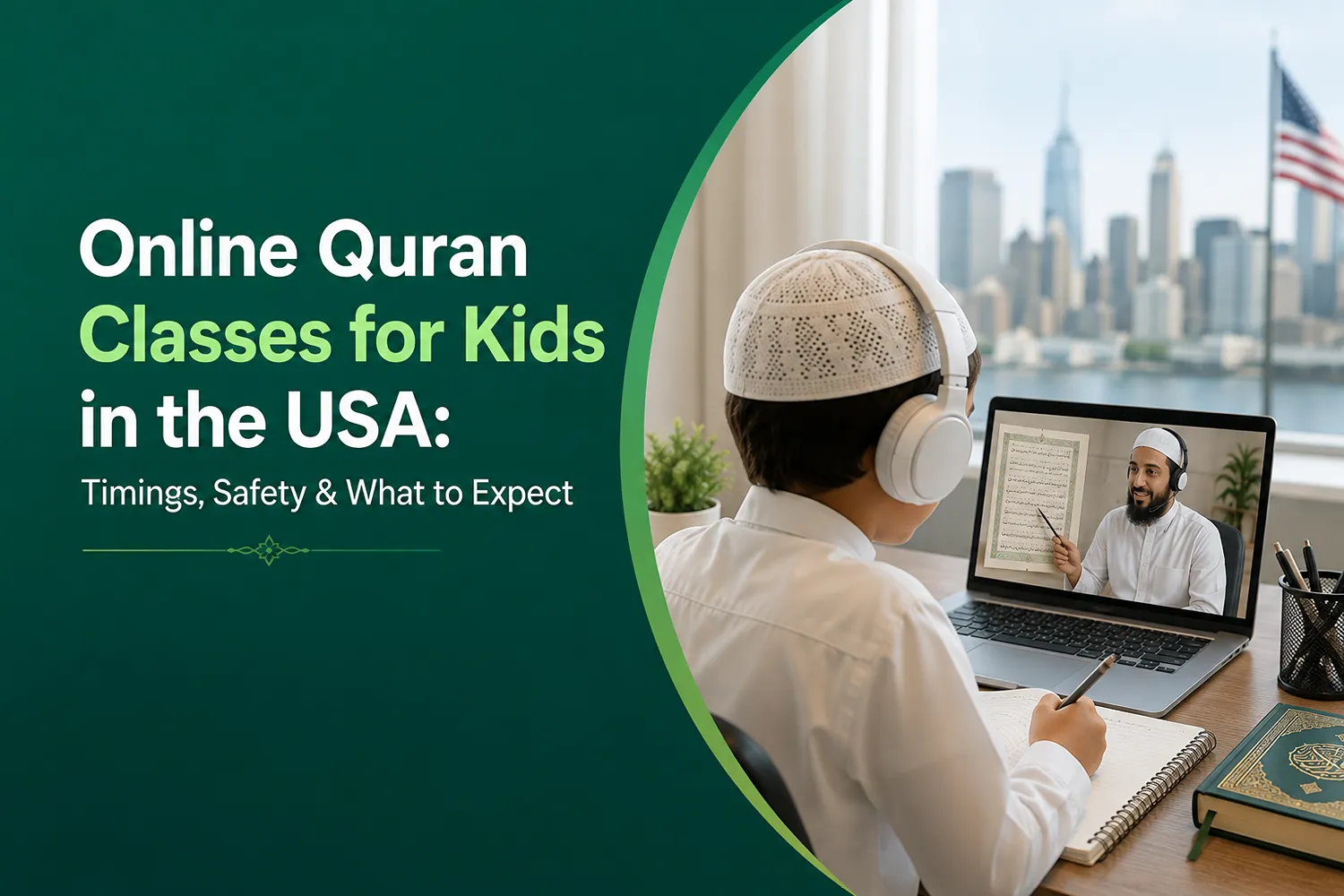
Online Quran Classes for Kids in the USA: Timings, Safety & What to Expect
It’s 7 PM in New Jersey. Dinner’s done, homework’s wrapped up, and your daughter still hasn’t opened her Qaida book this week. If you’re raising Muslim kids in the USA, you know how packed the evenings get: soccer practice, piano lessons, FaceTime calls with grandparents back home. Squeezing in Quran lessons on top of all that can feel like one more thing you don’t have time for.
That’s exactly why so many American Muslim families are turning to online Quran classes for kids in the USA, one-on-one lessons that come to your living room instead of the other way around. At eQuran Zone, we built our schedule around US family life, not the other way around. Here’s what those classes actually look like, time zones included.
Why More USA Families Are Choosing Online Quran Education
The Muslim community in America keeps growing. Pew Research Center estimates the U.S. Muslim population could reach 8.1 million by 2050, roughly double today’s share of the population. That growth is happening in suburbs and small towns just as much as big cities, places where the nearest mosque with a proper Quran program might be forty minutes away, or doesn’t have room for one more child right now.
Online Quran classes for kids in the USA solve that problem without asking you to compromise on quality. eQuran Zone was built for families who want a structured Quran education but don’t have a local option that fits their life. Read more on our About page, or look through the Home page to see what a class looks like.

Scheduling Classes Around US Time Zones
Pakistan sits about nine to ten hours ahead of the US, depending on daylight saving and which coast you’re on. That gap works in your favor. When it’s 6 PM in New York, it’s around 3 or 4 AM the next day in Lahore, and some tutors really are up teaching at that hour, since for many of them, this is full-time work.
In practice, a family in California can book a class right after school, a family in Toronto can slot one in before dinner, and a family in Texas can grab a weekend morning session without anyone staying up late. We don’t run on one fixed timetable, your tutor works out a recurring time that suits your Quran classes for kids USA time zone, whether that’s Eastern, Central, Mountain, or Pacific, adjusting for daylight saving twice a year.
You can see open slots and pick a time on the Register page, or message us directly on WhatsApp if you’d rather talk through timing first.
How Classes Fit Around School and Extracurriculars
US school schedules aren’t exactly light. Between homework, soccer practice, and weekend birthday parties, parents often tell us there’s maybe a thirty to forty five minute window most evenings free. That’s really all a Quran class needs.
Each one-on-one session with eQuran Zone runs thirty minutes, long enough to absorb a Noorani Qaida lesson or a page of Quran Reading practice, short enough that it doesn’t compete with bedtime. Most families choose three, four, or five classes a week depending on the course and how quickly they want their child to progress.
Because it’s one tutor working with one student, there’s no group schedule to accommodate. If your son has a swim meet on Tuesday, you move Tuesday’s class, not the whole week. That flexibility matters once school sports and clubs kick in, and it’s why parents in the USA stick with an online setup rather than a Saturday morning school for a kid who’s already worn out.
Depending on where your child is starting, that might mean beginning with Noorani Qaida, moving into Quran Reading once they read fluently, or, for families who started this journey back home, jumping straight into Hifz Quran memorization.
Keeping Kids Safe and Engaged Online
Handing your child a screen and a stranger’s voice is a fair thing to worry about. A few things make this different from just another app or a YouTube channel.
Every class is live, one-on-one, over Zoom, Microsoft Teams, or WhatsApp video, whichever your family already uses. There’s no recorded content and no group chat with other students. You choose the platform, and you’re free to sit in on any session, which most parents do for the first few classes.
eQuran Zone offers both male and female tutors, and most families with young daughters ask for a female teacher, arranged from the start. Engagement matters as much as safety, a good tutor for a seven year old in Chicago sounds different from one teaching a Qaida class in Lahore. Ours keep young, distracted kids paying attention for the full thirty minutes, using repetition, praise, and short breaks rather than lecturing at a screen.
For younger children especially, we often pair Quran lessons with Islamic Studies for Kids so learning feels like more than recitation, with stories, manners, and basic beliefs woven in alongside the letters.
Picking the Right Course for Your Child
Every child starts somewhere different. If your child has never held a Qaida book, Noorani Qaida is where you begin, covering the Arabic alphabet, correct sounds, and basic reading rules. Once they read Arabic script comfortably, Quran Reading builds fluency through the Quran itself.
For kids who read well but rush through verses or mix up similar sounding letters, the Tajweed Course slows things down and teaches correct pronunciation and recitation rules. Families hoping their child memorizes the Quran fully move into Hifz Quran once the fundamentals are solid, many doing it after school over Zoom rather than at a full-time madrassah.
It’s not only for kids, either. If you’re a parent who never got proper Quran lessons yourself, our Quran Classes for Adults follow the same one-on-one format. Compare everything on the All Courses page before deciding where to start.
What American-Born Kids Need From a Quran Tutor
A lot of parents ask directly: will the tutor understand my kid? American-born kids often think in English first, switch code between Arabic terms and everyday slang, and don’t always share the same reference points as a tutor teaching from Lahore.
It matters more than people expect. A tutor using comparisons a nine year old in Ohio has never heard loses that kid’s attention fast. Our tutors teach second generation Muslim kids across the USA, UK, Canada, and Australia, and they adjust: simpler English, patience with mixed Arabic-English sentences, no assumption a child already knows terms their parents grew up with.
Islamic education online USA families choose isn’t just about reciting correctly. It’s about a child understanding why the recitation matters, in language that lands for a kid growing up between two cultures. That’s the difference a genuinely experienced Quran tutor for American Muslim kids makes, not just correct tajweed, but a child who doesn’t dread the lesson.
What It Costs and How to Get Started
Pricing is simple across every course. For families in the USA and Canada, eQuran Zone runs three plans: Basic at thirty dollars a month for three classes a week, Standard at thirty five dollars for four classes, and Premium at forty dollars for five classes a week, the plan most families choose. Every session is thirty minutes, one tutor, one student. Full details are on the Pricing page.
Before committing to any plan, you can book a free trial class, so your child meets the tutor and you see the first lesson before paying anything. Parents in Manchester, London, New York, Sydney, and Toronto have gone through the same trial-then-enroll process, and it’s the same for new families in Chicago, Houston, or Los Angeles.
Frequently Asked Questions
What time zone do classes run in for USA families?
We don’t lock classes to one fixed time zone. Your tutor works out a recurring weekly slot around your Eastern, Central, Mountain, or Pacific schedule, and adjusts for daylight saving twice a year.
Are teachers used to teaching American-born kids?
Yes. Our tutors regularly teach second generation Muslim children across the USA, UK, Canada, and Australia, and they’re used to kids who think and joke in English first, not Arabic or Urdu.
How do I fit classes around the US school schedule?
Each class is only thirty minutes, and because it’s one-on-one, you can move a session around a swim meet or a late homework night without disrupting anyone else.
Is there a free trial before I have to pay anything?
Yes. You can book a free trial class through the Register page before choosing a paid plan, so your child can meet the tutor first.
Do you offer both male and female tutors?
Yes. We have both male and female tutors, and most families with daughters request a female tutor, which we arrange from the very first class.
What platform do the classes use, Zoom, Teams, or something else?
Whichever your family is most comfortable with: Zoom, Microsoft Teams, or WhatsApp video call. You choose the platform when you register.
What course should my child start with?
If they’ve never studied Arabic reading before, start with Noorani Qaida. If they already read Arabic, Tajweed is usually next, and Hifz Quran comes once the basics are solid.
Conclusion
Fitting Quran lessons into an American kid’s week doesn’t have to mean another early Sunday school run or a program that never quite matches your schedule. A tutor who works around your time zone, keeps sessions short enough for a tired kid to focus, and gets what it’s like raising a Muslim child in the USA, makes the whole thing stick.
If you’ve been putting this off because you couldn’t picture how it would fit into your week, Book a Free Trial at a Time That Works for You (USA) and see the first class for yourself before deciding on anything. Or if you’d rather ask a few questions first, reach out through Contact or send a message on WhatsApp, someone will get back to you quickly with real answers, not a script.


