
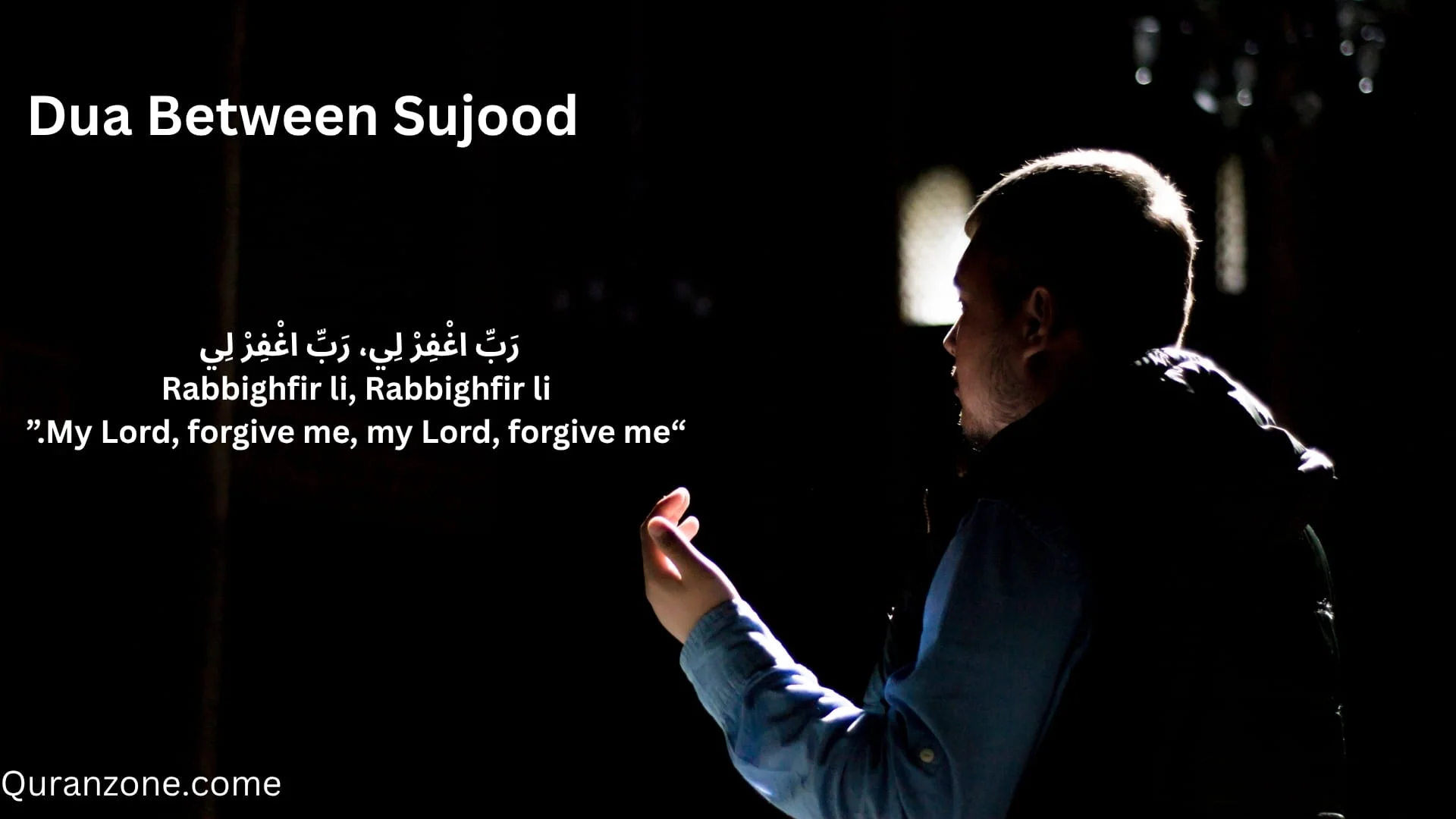
The duas which are recited between the sujood in salah are among the most beautiful moments in this prayer. A Muslim remains in the sitting position for a moment before entering into the second position of prayer (sujood). This sitting posture is known as Jalsa, which translates to “sitting together”. During this interval, Allah’s Messenger (saws) gave us some of the authentic prayers with their profound meaning of forgiveness, mercy, guidance, and provision.
The most common and authentic dua between sujood is:
رَبِّ اغْفِرْ لِي، رَبِّ اغْفِرْ لِي
Rabbighfir li, Rabbighfir li
“My Lord, forgive me, my Lord, forgive me.”
The Prophet (saws) used to make this dua frequently in their prayers. In this brief prayer, scholars refer to two things: its ease in recitation and its great power, which is based upon its elements of humble servants, the remembrance of Allah, and hope in Allah’s Mercy. There are a lot of Muslims who know the actions of salah, but they do not know the importance of the duas that are made between the two prostrations. Learning these authentic supplications helps improve concentration (khushu), strengthens spirituality, and allows a believer to follow the Sunnah more. By the end of this article, you will be able to confidently recite the authentic Sunnah duas during this important part of salah.
What Is the Dua Between Sujood?
The dua between two sujood is the supplication that gets recited while sitting between the two upward-facing prostrations of prayer. The Muslim makes two rak‘ah during the five rak‘ah prayers he prays. There is a brief sitting between these two, or ‘Jalsat al-Istirahah’ or simply ‘Jalsa’. This sitting isn’t simply a stop for the body. This is a time of spiritual elevation when the worshipper requests forgiveness, mercy, guidance, as well as blessings from Allah. The Prophet (S) would make du’a all the time in this position. Therefore, the remembrance and supplication that take place during the two sujoods is considered to be a significant Sunnah of prayer.
Is Dua Between Sujood Obligatory?
There are established views on the obligatoriness or Sunnah of the duas themselves. Views are varied among Islamic scholars about these duas being obligatory or Sunnah.
- Many scholars consider saying at least a minimal supplication like “Rabbighfir li” to be a Sunnah Mu’akkadah (emphasized Sunnah).
- Some Hanbali scholars believed that it was obligatory as it was something that the Prophet saws used to do.
All scholars have agreed, however, that duas that are authentic between sujood are extremely recommended and part of the beautiful Sunnah of salah.
Why Is This Dua Important?
Humility is the lesson in this moment of prayer. A believer remains in complete submission (which he makes in sujood) and then sits down to seek forgiveness and mercy from Allah. It’s a reminder that:
- Every day, humans are in need of Allah’s forgiveness.
- Success is with Allah.
- Salah is more than just physical worship; it’s spiritual communication!
The duas between the positions of sujood will also help to draw one’s attention and consciousness to salaah. The worshipper slows down while making duas for Allah’s aid.

Authentic Dua Between Sujood With Arabic, Transliteration, and Translation
Below are authentic duas reported from the Prophet ﷺ.
Short Dua Between Sujood
| Arabic Dua | Transliteration | English Translation | Hadith Source |
| رَبِّ اغْفِرْ لِي، رَبِّ اغْفِرْ لِي | Rabbighfir li, Rabbighfir li | My Lord, forgive me, my Lord, forgive me | Sunan Abu Dawud |
This is the simplest and most commonly recited dua between the two sujoods.
The Prophet ﷺ often repeated it more than once. Many scholars recommend saying it two or three times calmly.
Comprehensive Dua Between Sujood
| Arabic Dua | Transliteration | Translation | Source |
| اللَّهُمَّ اغْفِرْ لِي، وَارْحَمْنِي، وَاهْدِنِي، وَاجْبُرْنِي، وَعَافِنِي، وَارْزُقْنِي، وَارْفَعْنِي | Allahummaghfir li, warhamni, wahdini, wajburni, wa ‘afini, warzuqni, warfa‘ni | O Allah, forgive me, have mercy on me, guide me, strengthen me, grant me health, provide for me, and raise my status | Jami‘ at-Tirmidhi |
This beautiful supplication covers nearly every major need of a believer. This is a prayer of great beauty and includes almost all the main requirements of a Muslim.
Meaning of Each Phrase
- Allahummaghfir li — Forgive my sins
- Warhamni — Shower me with mercy
- Wahdini — Guide me to truth
- Wajburni — Repair my weaknesses and losses
- Wa ‘afini — Grant me health and protection
- Warzuqni — Provide sustenance
- Warfa‘ni — Elevate my status in this life and the next
This dua is very extensive and is a prayer based on total reliance upon Allah – Taa’alah.
Hadith Proofs About Dua Between Sujood
Numerous true narratives demonstrate that the Prophet ﷺ used to make supplication between the two prostrations frequently.
Hadith of Hudhayfah رضي الله عنه
Hudhayfah رضي الله عنه narrated that the Prophet ﷺ used to say between the two prostrations:
“Rabbighfir li, Rabbighfir li.”
This narration is found in Sunan Abu Dawud and other collections. This hadith clearly establishes the Sunnah of making dua during the sitting between prostrations.
Hadith of Ibn Abbas رضي الله عنه
Ibn Abbas رضي الله عنه reported that the Prophet ﷺ used to say:
“Allahummaghfir li warhamni wahdini wajburni wa ‘afini warzuqni.”
This narration is recorded in Jami‘ at-Tirmidhi. Scholars explain that this hadith demonstrates the permissibility of making longer supplications between the two sujoods.
Practice (Sunnah) of Prophet (s)
The Companions noticed that the Prophet ﷺ would not hurry between the two sujoods. He paused for so much time for the good remembrance and supplication. This means that the Muslim should not rush in his prayers.
How to Recite the Dua Between Sujood
If the method of Sunnah training is understood properly, it enhances concentration, and it boosts reward.
Sit Properly
The last sujood:
- Slowly lift your head and relax.
- Sit with tranquility
- Left foot is under the body
- The right foot remains straight
- The sitting posture is “iftirash.
Place Hands Naturally
Hands should be resting on the knees or thighs. Don’t make any needless movements during this moment.
Recite Slowly
Avoid haste in reciting the duas. Prayer should be thoughtful and heartfelt. To know what to say at the time of calling out to Allah.
Repeat the Dua
Numerous scholars suggest doing the following:
- “Rabbighfir li” two or three times
This is like the message of most prophets, who repeatedly exhort significant prayers.
Night Prayer Variations
Sometimes the Prophet ﷺ would say longer leave prayers which were more elaborate supplications in Tahajjud and/or longer voluntary prayers. This demonstrates flexibility with regards to Sunnah.
Benefits and Virtues of Dua Between Sujood
There are numerous spiritual benefits in the dua between the two sujood.
Seeking Allah’s Forgiveness
Forgiveness is the main theme in these duas. All men have sinned, on purpose or by accident. The repetition of Rabbighfir li’ is a reminder to believers to continuously pray for Allah’s mercy. Allah is always going to have mercy on those who repent sincerely.
Increases Khushu in Salah
Many people “pray but not pray. Many people pray mechanically. Memorized duas have a higher sense when our intention is strong and expressive. This will enhance the quality of the salah.
Strengthens Tawakkul
The more Sunnah dua contains requests for:
- Guidance
- Provision
- Health
- Mercy
- Strength
This is to learn total dependence on Allah.
Follows the Sunnah
All acts of revival, which are accomplished during worship, are rewarded. Reciting Sahifah (douas) between sujood is a simple yet powerful way a Muslim can revive a forgotten act of the Prophet saws, which is nowadays mostly forgotten.
Brings Inner Peace
Ibn Uthaymeen, amongst others, mentioned that supplication with sincerity, in the state of prayer, softens the heart and brings calm and tranquility. The spiritual calmness increases without any effort if a believer genuinely calls on Allah to forgive him during salah.
Common Mistakes During Dua Between Sujood
In this section of prayer, a lot of Muslims commit mistakes due to ignorance.
Rushing the Sitting
Some people do not take a breath between the two sujoods.
The Prophet (saws) sat down quietly during this sitting. Hypermimesis is to be avoided.
Forgetting the Dua Entirely
Most of the worshippers remain silent, due to lack of knowledge of the supplications done in the sunnah. It is good to remember even the entire dua “Rabbighfir li” (God has mercy on you.
Incorrect Pronunciation
Practice writing the word with correct pronunciation, but not too fast!
It is possible to enhance recitation by listening to qualified teachers of quran and salah.
Treating Salah Like a Routine
The purpose of these duas is to remind and relate to Allah, not to repeat them robotically.
Emphasize meanings when reciting.
Can You Make Personal Dua Between Sujood?
Some scholars say that one is allowed to make personal supplications at this time, particularly if they are good and permissible requests.
However:
- Sunnah duas should be what you make your priority.
- Personal duas should not replace the prophetic supplications completely
These can include requests to Allah for:
- Ease in hardship
- Beneficial knowledge
- Good health
- Righteous children
- Achievement of success in the field of halal.
Difference Between Short and Long Dua Between Sujood
| Short Dua | Long Dua |
| Easier to memorize | More comprehensive |
| Focuses mainly on forgiveness | Covers multiple needs |
| Common among most Muslims | Often recited in longer prayers |
| Ideal for beginners | Ideal for deeper reflection |
Both of them are true and agreeable.
Best Way to Memorize the Dua Between Sujood
Start Small
Begin with:
Rabbighfir li
Then, gradually learn the longer version.
Practice Daily
Repetition is needed sporadically, but consistency is more effective for the sake of memorization.
Understand the Meaning
Memorization will be easier if you know what you want to say.
Write It Down
There is a benefit to the visibility of the duas close to the prayer space to reinforce learning.
FAQs
u003cstrongu003eIs it obligatory to make duas between Sūjūd?u003c/strongu003e
The scholars believed that it is an emphasized Sunnah or, in some cases, it is obligatory. At the very least, Muslims should preserve their original supplications and say them frequently.u003cbr /u003e
u003cstrongu003eWhich are the shortest duas between the sujood?u003c/strongu003e
The shortest real duas are:u003cbr /u003eu003cstrongu003eu003cemu003e“Rabbighfir li”u003c/emu003eu003c/strongu003eu003cbr /u003eu003cstrongu003e My Lord, forgive me.u003c/strongu003eu003cbr /u003e
u003cstrongu003eIs it allowed to make personal dua in between the two sujood?u003c/strongu003e
Yes, many scholars permit duas for personal needs in addition to the authentic duas of the Sunnah.u003cbr /u003e
u003cstrongu003eWhen should I repeat Rabbighfir li?u003c/strongu003e
It can be said once, twice, or three times. Many types of dhikr and dua encourage repetition, that of particulars. Repetition (of particulars) is advised in many types of dhikr and duas.u003cbr /u003e
u003cstrongu003eIs it possible to recite dua between sujood in English?u003c/strongu003e
It would be preferable to say the prayers in Arabic if possible. The beginner or the new Muslim can
Conclusion
There are duas that are performed between two rak’ah of the salat, which will be discussed, but are neglected by many Muslims during salat. This short period of rest between the two prostrations is an opportunity to seek forgiveness from Allah SWT and mercy from Allah SWT, the best of guidance, the provision, and the healing from Allah SWT. The most straightforward, sincere prayer is:
رَبِّ اغْفِرْ لِي
Rabbighfir li
Father, forgive me.
The Prophet (SALLALLAHU ALEYHIHIS SALLAM) used to recite this dua regularly, and also elaborated on other duas in great length. Through this, Muslims can enhance their focus, spirituality, and relationship to Allah by learning and practicing authentic remembrances. Make these duas a habit, whether it’s starting with just a few or all of the words in each prayer today. Over time, the quality of worship can change for the better due to the consistent practice of small Sunnahs.


