
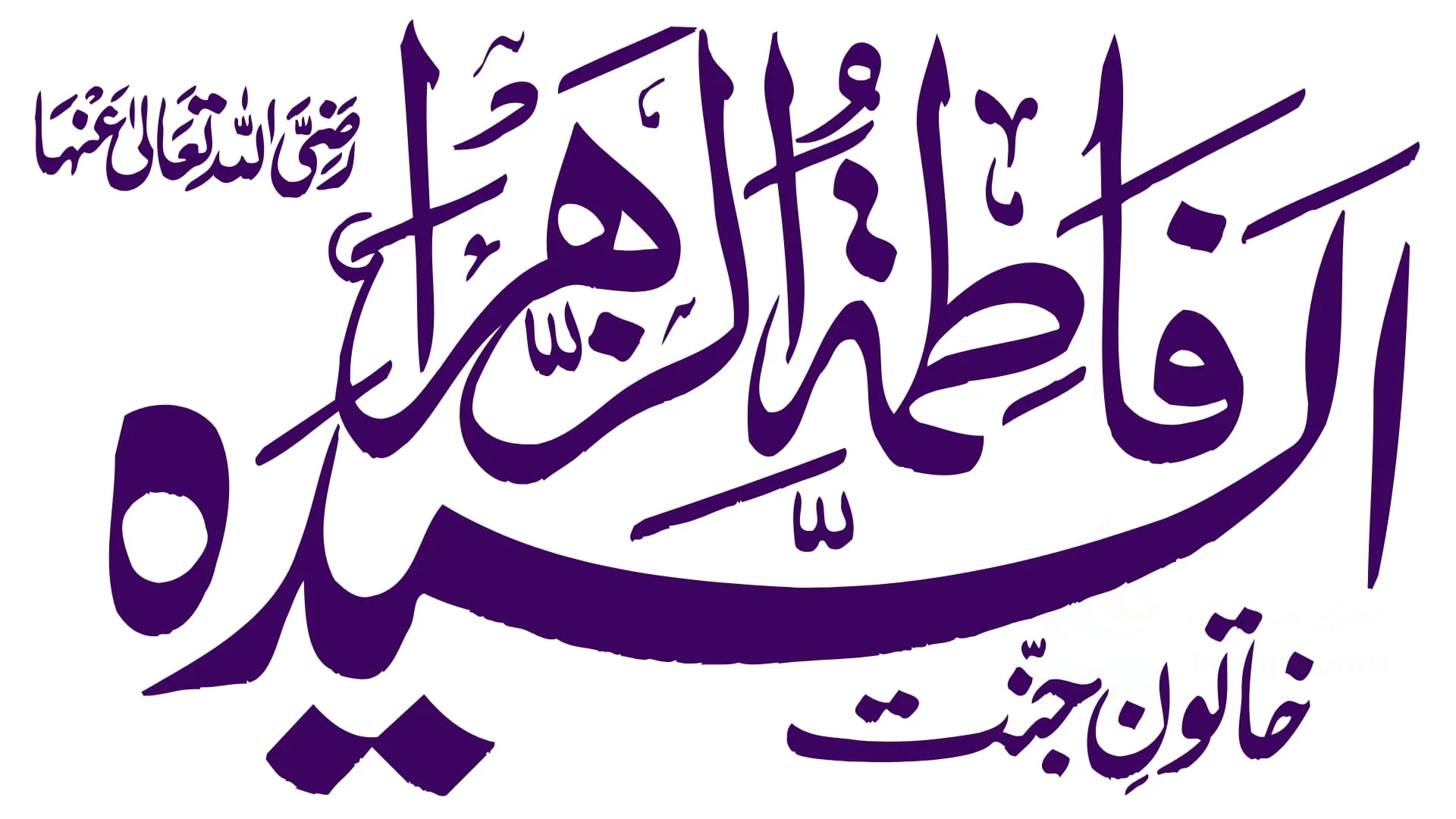
Fatimah bint Muhammad is one of the most respected women in Islamic history. She was the beloved daughter of the Prophet Muhammad ﷺ and Khadijah bint Khuwaylid, the mother of the believers. Throughout the Muslim world, she is remembered for her piety, modesty, patience, knowledge, and devotion to Allah.
She was known by titles like Fatima al-Zahra, Sayyidatun Nisa al-Alamin, and Leader of women in paradise. She was a symbol of purity and faith for generations of Muslims. However, she lived a life of sacrifice, suffering, devotion, and family love. Although the daughter of the greatest Prophet, she lived a simple, modest life and was humble till her death.
Fatima’s story of Muhammad’s daughter is not just a historical one but a guide for Muslims pursuing spiritual excellence and good family values. She helped her father in Makkah during hard times, stood by her husband Ali in poverty, and raised children who were important in Islamic history. This article reflects the entire Fatima bint Muhammed life, from her birth, upbringing, marriage, her involvement in early Islam, post-Prophetic events, virtues, children, and death, as well as her legacy.
Early Life of Fatimah bint Muhammad
Birth and Family Background
Fatimah bint Muhammad was born in Makkah sometime in the 600s CE. There is a slight variation among historians regarding the year of her birth, but it is generally believed that she was the youngest daughter of the Prophet Muhammad ﷺ and Lady Khadijah رضي الله عنها. She was born into nobility where there was honor, compassion, and reverence for God. Her father later on was the last Messenger of Allah, and her mother was one of the first believers in Islam.
Childhood During the Difficult Days of Islam
These early days of Islam had been beset by persecution. The leaders of the tribe Quraysh were the ones who harmed Prophet Muhammad ﷺ repeatedly. The Quraysh were the ones who opposed Prophet Muhammad ﷺ. Young Fatimah was present to see her father’s anguish and pain during this tough time. A story is told of her that when the disbelievers insulted and beat the Prophet ﷺ, she would console him. Due to her care and affection, she was sometimes referred to as “Umm Abiha,” the mother of her father.
Her mother Khadijah died in the “Year of Sorrow,” and she was greatly affected by the loss. Following this tragedy, Hazrat Fatima Zahra grew even closer to Hazrat Sawsan and the Prophet ﷺ and provided care for him.

The Honorific Title “Al-Zahra”
The title of “Al-Zahra” is a title of honor given to the Lord for His wife, the Most High.
It is one of the most popular recitations of “Al-Zahra” or “the radiant” or “the shining one” from Fatima al-Zahra. According to scholars, this Al-Zahra honorific name was an indication of her purity, spiritual radiance, and noble nature. Many Muslims also know her as:
- Al-Batul
- Umm al-Hasan
- Sayyidatun Nisa al-Alamin
- Zahra
The titles reflect her revered place amongst the Muslim women.
Marriage to Ali ibn Abi Talib
A Blessed and Simple Marriage
The simple and blessed union of two people. The marriage of Ali with Fatimah is one of the most auspicious marriages in the history of Islam. The marriage of Ali ibn Abi Talib to Fatimah is a simple, pious, and respectful relationship. Ali رضي الله عنه proposed to Fatimah around 623-625 CE. Prophet Muhammad ﷺ readily took up the offer, having heard of Ali’s bravery, honesty, and commitment to Islam. Their marriage was extremely simple. Ali gave the shield to settle the dowry, as per history. There was no extravagance or luxury. This is a significant reminder for Muslims of avoiding undue burdens in marriage that is relevant today.
Their Life in Madinah
Fatimah and Ali had very little money when they got married, living in Madinah. They were sometimes subject to hunger and deprivation, but they were patient and grateful to Allah. Although Hazrat Fatima Zahra was a daughter of the Prophet ﷺ, yet she did household tasks herself. She ground grain by hand, brought water, and personally cared for her children. This was the life of a simple and modest man, and an example for Muslim families for years.
Children of Fatimah bint Muhammad
Fatimah and Ali had five famous children. Through them, the lineage of the Prophet Muhammad ﷺ continued.
| Child | Role | Significance |
| Hasan ibn Ali | Son | 2nd Shia Imam and grandson of the Prophet |
| Husayn ibn Ali | Son | Martyred at Karbala |
| Zaynab bint Ali | Daughter | Known for bravery after Karbala |
| Umm Kulthum | Daughter | Historical marriage discussions exist |
| Muhsin | Son | Mentioned in some narrations |
Hasan and Husayn were the grandchildren of the Prophet Muhammad that the Prophet ﷺ loved the most. He often carried them and publicly expressed his love for them.
Role of Fatimah in Early Islam
Counselling in times of difficulty and distress.Counselling in battle and adversity. Fatimah bint Muhammad was greatly influential in pivotal moments of Islamic history. She tended to the injuries of the Prophet Muhammad ﷺ when he was injured in the Battle of Uhud. She was also very supportive of the Muslim community in tough times and their emotional and spiritual needs. Her forbearing with the tribulation proved her to be a pattern for the faithful.
Support During Battles and Hardships
Fatima bint Muhammad was one of those who was most attached to Allah. She used to pray and remember Allah for long periods of time. So, she prayed a great deal for others before praying for herself, narrators say. She lived out her life with sincerity, humility, and devotion.
Generosity and Kindness
Despite her poverty, Fatimah was a generous person. She was mentioned in Islamic sources as someone who needed food, and she gave them food even when her family was in need.
This quality helped further her status as one of the greatest women in Islam.
Why Was Fatimah bint Muhammad Called the Leader of the Women of Paradise?
In terms of her piety, purity, patience, and devotion to Allah, Fatimah bint Muhammad was called the “Leader of the Women of Paradise”. Prophet Muhammad saws loved her so much and spoke highly of her good nature in many ahadith. She lived a simple life, a life of worship, humility and sacrifice; she was the daughter of the last Messenger of Allah.
Muslims praise her for being by her father’s side during hard times, for being with her husband Ali ibn Abi Talib during hard times, and for raising the righteous children, Hasan ibn Ali and Husayn ibn Ali. Her piety and high moral standards rendered her one of the best women in Islamic history and a model to Muslim women throughout the world.
Islamic Women Perfection and the Status of Fatimah
Islamic women perfection is a concept of Islamic traditions which refer to several extraordinary women. Together with Fatimah, one of the most frequently mentioned is:
- Maryam (Mary)
- Asiyah
- Khadijah
Prophet Muhammad ﷺ was once quoted as praising Fatimah and calling her one of the leaders of the women in paradise. Hence, the Muslims call her the Leader of women in paradise and Sayyidatun Nisa al-Alamin.
The Passing of Prophet Muhammad ﷺ
When the Prophet Muhammad ﷺ died in 632 CE, it was a traumatic event for Fatimah. Historical accounts say she was deeply grieved and that she was soon to go and meet her father. Following his death, several political and social questions arose among the Muslim community.
The Saqifa and Leadership Discussion
The first event following the death of the Prophet (s) was the meeting at Saqifa where leadership discussions occurred. Later, various Islamic schools formed their different interpretations of these events.
The Fadak Garden Dispute
One of the issues that is still discussed is the Fadak garden dispute concerning Fatimah. Fadak was a piece of land related to the Prophet ﷺ. After his death, Fatimah asked for it to be given to her. But Abu Bakr رضي الله عنه had a different opinion, given his interpretation of the Prophetic teachings on inheritance. Later, it became a major topic for debate between some Sunni and Shia scholars.
Sunni and Shia Perspectives
The following table summarizes commonly discussed historical perspectives respectfully and neutrally:
| View | Fadak | Death Cause |
| Sunni Perspective | Considered state property | Illness and grief |
| Shia Perspective | Considered a gift to Fatimah | Injuries and grief |
These differences should be discussed with respect, and not with hateful and divisive language.
House Incident Narrations
There is a narration about Fatimah’s house after the death of the Prophet (saws) that is mentioned in the history books. Sunni and Shia historians give differing accounts of these reports. Reports of physical harm are generally denied by Sunni scholars, and accepted by Shia scholars as historical. Due to these opposing perspectives, it is recommended that Muslims show respect to all great Islamic personalities, and learn history carefully.
Death of Fatimah bint Muhammad
Final Days
Fatimah bint Muhammad died in 632 CE, some mere months after the death of the Prophet Muhammad (saws). Her actual age at the time of her death is not recorded in the various reports; it was thought to be 18 or 27 years. She was rumoured to have asked for a simple burial before her death.
Burial
There are historic reports of Fatimah being buried at night in Madinah. It is not clear where she is buried, as several historians have suggested. Her passing was one of the most tragic events of the early days of Islam.
Legacy of Fatimah bint Muhammad
Example for Muslim Women
Hazrat Fatima Zahra’s legacy lives on through the generations. She is a role model for Muslim women of:
- Faith
- Modesty
- Patience
- Family devotion
- Worship
- Charity
Her story exemplifies the importance of righteousness over riches and reputation.
Descendants and Sayyids
In many Muslim communities, the family of Fatimah and Ali are referred to as Sayyids or Sharifs. Through her sons Hasan and Husayn, the family lineage of the Prophet Muhammad ﷺ continued.
Connection to Karbala
The tragedy of Karbala is very much associated with Fatimah’s family. Her son Husayn was a symbol of sacrifice and justice since his martyrdom. This event is still significant in the hearts and minds of Muslims all over the world.
Fatima Hand Symbol
The “Hand of Fatima” in some cultures became a cultural symbol of protection and blessings. But there is a difference among scholars on religion use of such symbols. Muslims mostly pay attention to her virtues and teachings and not to symbols.
Intercession for the Day of Judgment
Many Muslims believe that the righteous family of the Prophet Muhammad ﷺ will have a special honor on the Day of Judgment through intercession by Allah’s permission. Islamic literature frequently includes narratives with respect to Fatimah’s position on the Day of Judgment that serve to highlight her spiritual qualities.
Lessons from the Life of Fatimah al-Zahra
There are endless lessons to be learned from the life of Fatima al-Zahra:
Patience During Hardship
She lived a life of poverty, persecution, and pain with dignity and trust in God.
Importance of Family
She became a role model for healthy Islamic family relationships through her love for her father, husband and children.
Simplicity Over Luxury
Though she was of a noble birth, she selected humility and simplicity.
Strong Worship
Her prayers, fasting, and remembrance of Allah emphasized the significance of spirituality in life.
Helping Others
She was generous, even in difficult times.
FAQ:
u003cstrongu003eWhat was Fatimah bint Muhammad’s date of birth?u003c/strongu003e
According to most of the Islamic historians, Fatimah bint Muhammad was born in Makkah about 605–615 CE.u003cbr /u003e
u003cstrongu003eWhy is Fatimah called Al-Zahra?u003c/strongu003e
The title Al-Zahra honorific title that means “the radiant” or “the shining one.” It’s about her integrity and her integrity of spirit.u003cbr /u003e
u003cstrongu003eWhat were the names of Fatimah’s sons?u003c/strongu003e
The sons of Fatimah bint Muhammad were Hassan ibn Ali and Husayn ibn Ali; both of them were dear grandsons of the Prophet Muhammad (saws).u003cbr /u003e
u003cstrongu003eWhy is Fatimah important in Islam?u003c/strongu003e
She is important because she was the daughter of the Prophet Muhammad ﷺ; she was the wife of Ali ibn Abi Talib; she was the mother of Hasan and Husayn; and she was an example of being pious and patient.u003cbr /u003e
u003cstrongu003eWhat did Fatimah do?u003c/strongu003e
She was renowned for her piety, modesty, charity, family devotion, and spiritual excellence.u003cbr /u003e
Conclusion
Fatimah bint Muhammad’s life story is one of the most inspiring in Islamic history. She was the daughter of Muhammad, accompanied him in his difficulties, lived humbly with Ali, had noble children, and was a beacon of faith and purity to Muslims everywhere. She was also called Fatima al-Zahra, Leader of women in paradise, and Sayyidatun Nisa al-Alamin, the lady. So, she was also known as Fatima al-Zahra, Leader of women in paradise, and Sayyidatun Nisa al-Alamin, the lady. She has learned patience, humility, worship, and devotion to family and faith in her life. Muslims continue to remember Hazrat Fatima Zahra because of her noble family line, because of her extraordinary character, and her proximity to Allah.


