
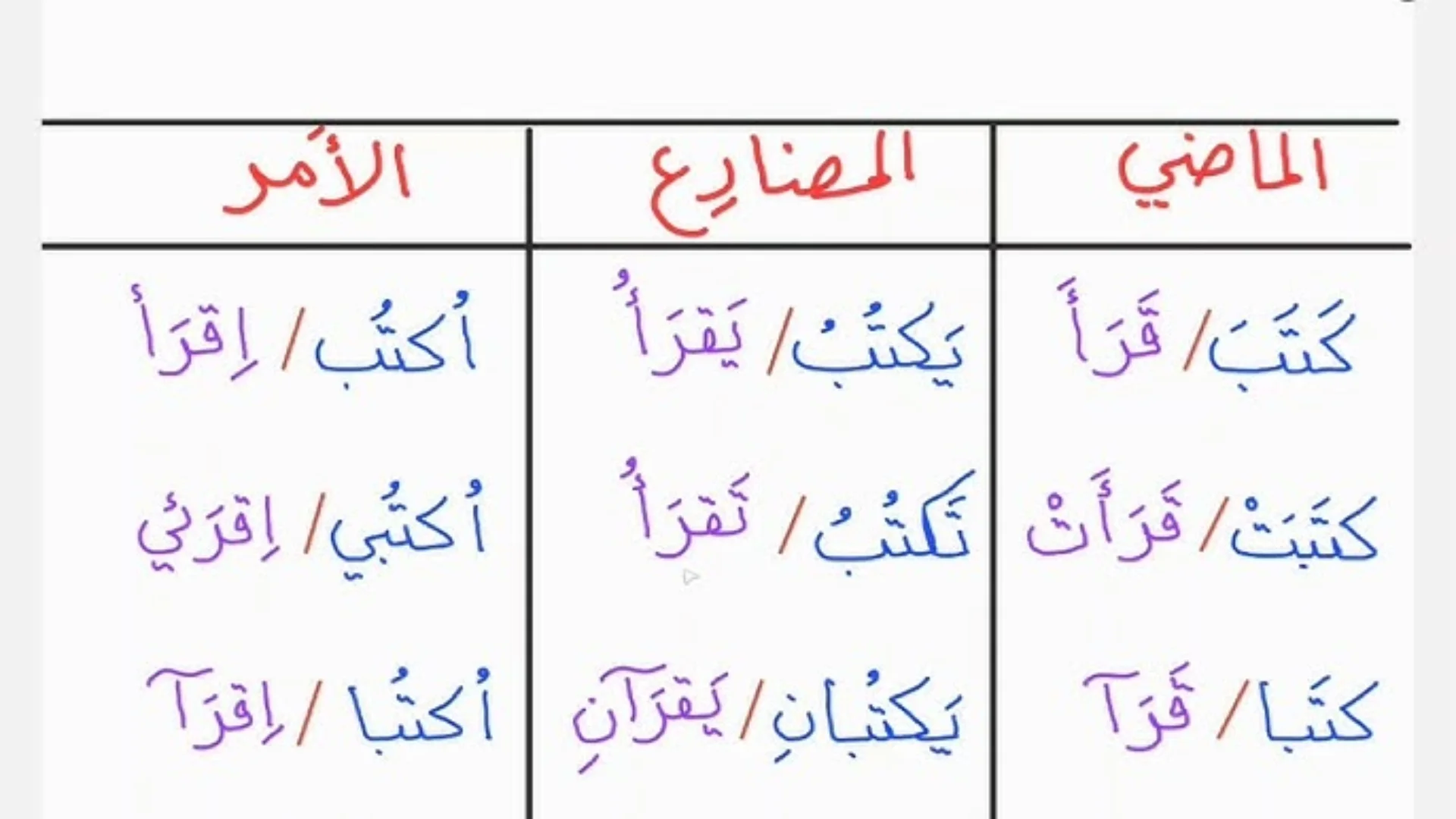
The official and standardized version of the Arabic language is the Fusha Arabic. It is used in books, news, and in formal settings by people all over the Arab world. Whereas everyday communication occurs in local languages, Fusha is an element that brings people together with a common language that is formal language. It is also referred to as the Modern Standard Arabic (MSA).
In a diglossic situation, researchers distinguish Fusha, which is the high variety. History Scholars observe that it is a direct descendant of Classical Arabic, the language of the Quran. According to the former research, it was used as a lingua franca among educated speakers. Analysts follow its development, introducing new words to represent new ideas, such as the internet and car, but maintaining its fundamental grammar. This maintains its historical continuity.
Find a language that spans centuries and continents. Fusha Arabic is a key to a rich literary heritage. It opens the windows to classical religious literature. Learning Fusha leads to the official speech of more than 20 nations. Therefore, the anchor of the Arab intellectual and cultural life is it. Study Fusha to know a world civilisation at its origin.
What is Fusha Arabic?
The standardized form of the Arabic language is the Fusha Arabic. Imagine it as the official, official Arabic. It is applied in books, newspapers, and academia. You listen to it on news programs. It is utilized in speeches by political leaders. It has joined the whole Arabic-speaking world.
The native Arabic speakers acquire the local dialect. Therefore, these are referred to as colloquial dialects. Therefore, these are dialects that they use in their daily communication with family members and friends. In school, they learn Fusha. Thus, this renders Fusha a second language to the majority of the Arabs. They read, write, and communicate formally using it. It also serves as a universal language. A highly educated Moroccan can know an educated Iraqi using Fusha.
Sometimes this standardized language is divided into two kinds. Therefore, the old form is known as Classical Arabic. It is the Quran and early Islamic writings. Its immediate successor is the Modern Standard Arabic. It was adapted to the addition of new words to represent contemporary ideas. MSA includes words such as internet and car. Therefore, they are not separated by most of the native speakers. Thus, they refer to either form as Fusha, meaning the most eloquent.

The History of Fusha
Fusha Arabic has a rich history. It is based on the pre-Islamic Arabian Peninsula language. Therefore, this kind of language was sophisticated, as used by poets in pre-Islamic times. Thus, their poetry was a glorified art. Thus, this early language was what we today refer to as Classical Arabic.
The Holy book of Islam, called the Qur’an, was dictated in Classical Arabic. Therefore, this gave the language a great religious and cultural significance. Muslims have been studying the Quran in its original form for centuries. Thus, this has maintained the language over time. Scholarly, literary, and governmental communication became standardized in the great empires of Islam in the Classical Arabic language.
Key Features of Fusha Arabic:
| Feature | Description |
| Name | Fusha Arabic (Modern Standard Arabic) |
| Usage | Books, newspapers, formal speeches, and academia |
| Historical Roots | Derived from Classical Arabic, the language of the Quran |
| Cultural Significance | Represents Arab intellectual and cultural identity |
| Learning Benefits | Access to literature, professional opportunities, and understanding of Islam |
| Relation to Dialects | Serves as a formal counterpart to colloquial Arabic dialects |
Cultural Heart of Fusha
The new generation posed new problems. The Arab world came into closer contact with the West as a result of the invasion of Egypt by Napoleon in 1798. This era led to the revival of Arabic literature called Nahda. New technologies, such as the printing press, came in. Newer schools and newspapers were instituted. The language needed to adapt. It was forced to narrate on new inventions and ideas. This was the modernization of Classical Arabic. It was also transformed into Modern Standard Arabic. The elementary grammar and form were retained. The vocabulary was extended to match the modern demands.
Fusha vs. Colloquial Arabic: the difference.
Fusha correlation with the colloquial Arabic is one of the most important peculiarities of the language. This state of affairs is referred to as diglossia. It also reveals that there are two different versions of the same language that coexist. They both play different roles in society. Fusha is the high variety. It is learned in school. It is also written and formal. However, it is utilized by people in literature, official documents, and news. It is uniform throughout the Arab countries. Therefore, the grammar rules are strict. Thus, the standardization of pronunciation is achieved.
Colloquial Arabic
The low variety are colloquial dialect. As a first language, they are studied at home. Therefore, they are spoken and informal. Thus, they are used by people in their everyday lives. These dialects differ widely in every part of the region. A Moroccan dialect may not be understood by an individual in Yemen. They have simpler grammar. Thus, their vocabularies and pronunciations are often different.
Visualize it in the following way: Fusha is a formal suit to what you wear when you have an important occasion. The everyday use of colloquial dialects is the everyday clothes. Intelligent speakers tend to alternate between them. They may talk about a news item in Fusha and then change to their regional dialect and discuss dinner.
The significance of Learning Fusha.
There are numerous advantages of Learning Fusha Arabic. It is a pathway to a rich culture and history. It shares with you hundreds of millions of people. To begin with, Fusha is the key to massive amounts of written content. You are also able to access books, articles, and websites of the Arab world. You will have an opportunity to read and hear the works of popular Arab poets and writers in their native language.
Second, it is necessary to achieve professional and academic purposes. Therefore, the language used in business, diplomacy, and academia in the region is Fusha. The ability to speak Fusha is useful in most jobs. It enables you to communicate both formally and well across national borders.
Third, the language of Islam is Fusha. To the Muslims, the study of Fusha gives them a greater attachment to the Quran and other religious books. It also enables one to get a first-hand interpretation of prayers and sermons.
Lastly, Fusha makes it simpler to learn different dialects that are used colloquially. Fusha also gives the basis of the language. Several words and structures are common. Having learnt Fusha, you may acquire the patterns of local dialects with less difficulty.
Tips for Learning Fusha Effectively
It is a commitment to learn any new language. The Fusha Arabic can be attained through a proper approach. Thus, these are some of the best tips that can be used to steer your learning process.
Build a Strong Foundation
Start with the basics. Study the alphabet Arabic, Ajbad. Learn how to pronounce every letter. Particular attention to the sounds that are not available in English. It is important to have a good understanding of the script and sounds. Then, proceed to simple vocabulary and grammar. An organized course can offer a definite way out.
Reading every day.
Fusha can be learned through reading. It puts you into a new vocabulary and proper grammar. Start with simple texts. Graded readers or children’s books are also very good. Gradually advance to the news and short stories. Reading also serves to keep the language fresh in your mind.
Listen Actively
Get used to listening to Fusha. Hear news reports from sources such as Al Jazeera. Read documentaries or formal speeches. In the beginning, you may not comprehend all. This is aimed at becoming familiar with the native rhythm and sound of the language. There are numerous sources of transcripts. You may read with what you hear.
Find a Language Partner
Practice is essential. Get a native speaker who can assist you. The pronunciation can be corrected by a language partner. They will assist you in practice of conversation. Speaking can help you to transition between passive and active knowledge. There are online sites that can introduce you to a tutor and language exchange partners.
Set a Routine
Unity is greater than vehemence. You had better take 30 minutes a day, rather than four hours a week. Elements: (1) Develop a realistic study schedule. Stick to it. A routine builds momentum. It renders learning a normal aspect of life. Be patient with yourself. The process of language learning is a marathon and not a sprint.
Conclusion
Fusha Arabic is not only a form of language. It is a living bridge between the past and the present. It connects various countries and cultures of a wide region. Although the local dialects make the Arab world so colorful and diverse, Fusha gives the Arab world a common identity and a common point of contact. Fusha stands as the beacon of the Arab cultural and intellectual life in the world, where English is becoming more and more popular in daily life. It is the language of the past, belief, and the official language. Studying Fusha does not simply teach you a language but it provides you with a seat at a table that cuts across continents and centuries. It is a call to learn about one of the great civilizations of the world, the way they are on the inside.


