
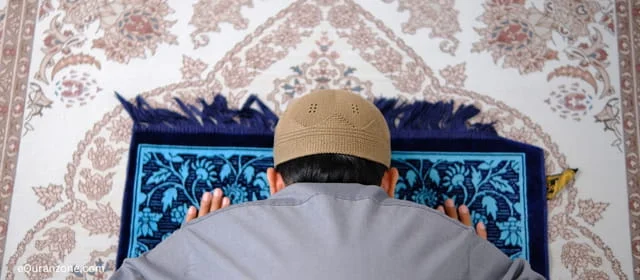
Maghrib Prayer plays a special role in the everyday life of a Muslim. It comes at a dramatic point- the time when the sun goes down, and the world starts to drag. This is not a mere physical transition between day and night; it has serious spiritual consequences. You will find all about Maghrib salah, its time, rak’ahs, method, its benefits, and the common mistakes to avoid in this guide.
What Is Maghrib Prayer?
The fourth out of the five prayers in Islam is the Maghrib prayer. It is offered right after sunset and is followed by Asr prayer and preceded by Isha prayer. Maghrib is an Arabic term that is translated as sunset or the setting of the sun. This is the very moment when this prayer is commenced–just when the sun goes down on the horizon. The importance of Maghrib namaz is huge, and its length is rather small compared to other prayers. It signifies the termination of the day and allows people to reflect, be thankful, and reconnect with the spiritual realm after the day.
Maghrib Prayer Time: When Does It Start and End?
To be able to perform the Maghrib prayer time properly, there is a need to understand its time.
Start Time: The Maghrib prayer starts as soon as the sun sets. The time of Maghrib salah begins as soon as the sun completely disappears below the horizon.
End Time (Sunni View)
Sunni scholars believe that Maghrib time terminates when twilight is lost and the sky is dark. It is here that Isha time starts.
End Time (Shia View)
In the Shia jurisprudence, Maghrib prayer may be conducted until midnight, particularly when paired with Isha prayer.
Practical Tips
To ensure accuracy:
- Use applications such as Muslim Pro or IslamicFinder.
- Follow your local mosque timetable
- Test valid online prayer time calculators.
Prayer is a very important aspect of Islam. It is not recommended to delay Maghrib without any necessity.

How Many Rak’ahs in Maghrib Prayer?
Maghrib prayer consists of a specific number of rak’ahs divided into obligatory and optional parts.
| Type | Number of Rak’ahs | Status |
| Fard | 3 | Obligatory |
| Sunnah | 2 | Recommended |
| Nafl | 2 (or more) | Optional |
Breakdown
- 3 Fard Rak’ahs: These are obligatory and have to be accomplished.
- 2 Sunnah Rak’ahs: Strongly recommended and regularly practiced.
- 2 Nafl Rak’ahs: Not compulsory, but an addition of extra reward.
This arrangement renders Maghrib salah brief, yet spiritually fulfilling.
Step-by-Step Guide to Performing Maghrib Salah
Assuming that you are learning the correct way to pray Maghrib, here are some simple instructions that you should follow:
Make Intention (Niyyah)
You, in your heart, intend to pray the Maghrib prayer in the name of Allah.
Start with Takbir
Raise your hands and say “Allahu Akbar” to begin the prayer.
Recite Surah Al-Fatiha
It should be followed by a short Surah like:
- Surah Ikhlas
- Surah Falaq
- Surah Nas
Perform Rukoo (Bowing)
Prostrate and repeat three times Subhana Rabbiyal Azeem.
Perform Sujood (Prostration)
Kiss and say Subhana Rabbiyal A’la 3 times.
Complete Three Rak’ahs
Repeat the steps with all three Fard rak’ahs. During the final rak’ah, sit during Tashahhud, offer blessings, and end with Salam.
Pray Sunnah and Nafl.
Perform 2 Sunnah rak’ahs and optional Nafl (if desired).
Important Tip
Concentrate on your relationship with Allah. Avoid rushing. Heart presence is more important than speed.
Why Maghrib Prayer Is Spiritually Powerful.
Prayer at Maghrib is not merely a ritual, but an extremely significant spiritual rest.
Day to Night
This scene is a representation of reflection. The day is over, and you are in front of Allah to examine what you have done.
Mental Peace
Maghrib salah helps to relax the mind. After a busy day, it provides emotional balance and relaxation.
Protection from Harm
The Islamic teachings emphasize that the evening time may introduce some challenges that are unseen. On-time Maghrib prayers enhance spiritual protection.
Strengthens Faith
Praying daily instills discipline and makes your relationship with Allah healthy.
Opportunity for Gratitude
It keeps you in mind to thank Allah that you have survived another day.
Du’a After Maghrib Prayer
After completing Maghrib prayer, making du’a is highly recommended.
Powerful Du’a
“Allahumma ajirni min al-naar”
(“O Allah, protect me from the Hellfire”)
Repeat this seven times after Maghrib prayer.
Other Practices
Personal du’a should be done in your own language.
- Practice dhikr (remembrance of Allah)
- Be quiet for several minutes and think.
- It is spiritually strong this time, and makes it more probable to be accepted.
Common Mistakes and How to Avoid Them
Many people make small mistakes during Maghrib prayer. By not indulging in them, you will have better worship.
Delaying the Prayer
It is not advisable to wait too late after the sun has set without any reason. When possible, pray early.
Skipping Sunnah
Some are in a hurry to take dinner and omit Sunnah rak’ahs. This reduces reward.
Lack of Focus
The rapidity of the prayer without comprehending or paying attention to it undermines the spiritual effectiveness.
Improper Wudu
Always make sure that before prayer, it is well purified.
Rushing the Salah
The Maghrib is brief and yet it is to be done calmly and properly.
Ramadan Maghrib Prayer
Maghrib prayer during Ramadan has an added meaning since it is the time of breaking the fast (Iftar).
Key Points
- Fast until Maghrib time, then break your fast.
- Pray Maghrib just after consuming a few dates and water.
- Avoid delaying prayer due to heavy meals
This is the balance between worship and nourishment, and it is part of Islamic discipline.
How to Pray Maghrib with Presence of Heart
Focused Maghrib praying is not merely a matter of accomplishing the acts, but the focus of your mind and heart towards Allah.
- Select a place of quiet
- Understand what you recite
- Slow down your movements
- Imagine that you are standing before Allah
- Unplug from distractions such as phones
Your salah can be more meaningful even with minor improvements.
FAQ
u003cstrongu003eWhen does Maghrib prayer start?u003c/strongu003e
Maghrib prayer starts immediately after sunset and ends when twilight disappears, and the sky becomes dark.u003cbr /u003e
u003cstrongu003eCan I then pray Maghrib late?u003c/strongu003e
Yes, when you miss it, you must pray as soon as you can. Nonetheless, postponing it without a cause is not popular.u003cbr /u003e
u003cstrongu003eIn Maghrib, how many rak’ahs?u003c/strongu003e
Maghrib prayer includes:u003cbr /u003eu003cbr /u003e3 Fard (obligatory)u003cbr /u003e2 Sunnah (recommended)u003cbr /u003e2 Nafl (optional)
u003cstrongu003eWhat shall I repeat in the Maghrib prayer?u003c/strongu003e
In Surahs, you always recite Surah Al-Fatiha, and then a small Surah, say Ikhlas, Falaq, or Nas.u003cbr /u003e
u003cstrongu003eWhy do we refer to Maghrib as a protection prayer?u003c/strongu003e
The Maghrib time is linked to spiritual susceptibility. Praying now enhances faith and offers protection against bad influences.u003cbr /u003e
Conclusion
The Maghrib Prayer is not merely a part of the daily routine but an opportunity to rejuvenate spiritually. The setting of the sun is an opportunity to stop, reflect, and reconnect with Allah. It is a short piece but with a profound meaning and strong advantages. When you pray Maghrib on time, with focus and followed by a heartfelt du’a, you not only enhance your faith but also bring peace and calm to your life. You are either a beginner or experienced; however, enhancing your Maghrib salah will transform your daily routine into a source of calm, discipline, and spiritual growth. Be diligent in making Maghrib prayer, and make it the quietest moment of your day.


