
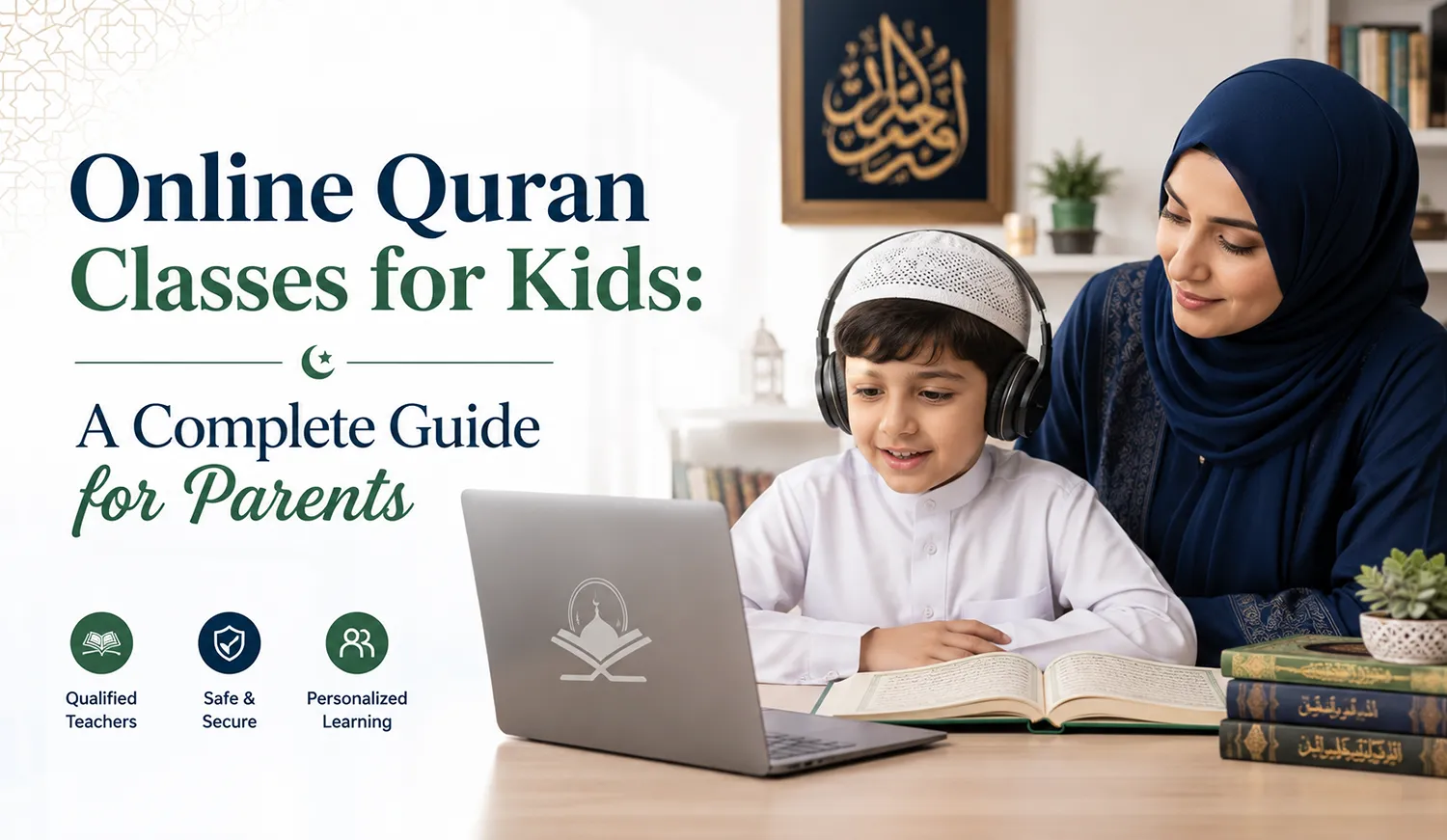
Online Quran Classes for Kids: A Complete Guide for Parents
If you’ve been searching for online Quran classes for your child, you’ve probably noticed the same thing a lot of parents run into: dozens of academies, similar-sounding promises, and not much clarity on what actually happens once you sign up. This guide walks through the real, practical questions the right age to start, what a class actually looks like, how to keep a child safe and engaged on a screen, and how to tell Noorani Qaida, Tajweed, and Hifz apart so you’re not guessing which one your child needs first.
What Age Should a Child Start Learning Quran Online?
There’s no single “correct” age, but most academies, including eQuran Zone, find that children as young as 4 or 5 can begin with simple letter recognition, while 6 or 7 is a common starting point for structured Noorani Qaida lessons. What matters more than the exact age is attention span can your child sit through a 20-30 minute session and follow simple instructions from a screen? If yes, they’re ready to start.
Younger children usually need shorter sessions with more repetition and visual cues, while children aged 8 and up can typically handle a more structured pace, including early Tajweed rules. If your child is a teenager just starting out, that’s completely fine too a good tutor adjusts the pace and tone rather than treating every beginner the same way regardless of age.
How Online Quran Classes for Kids Actually Work

The format is simpler than most parents expect. A tutor and student join a live video call no pre-recorded lessons, no app your child has to figure out alone. The tutor shares the Quran text on screen, the child reads or repeats after the teacher, and mistakes get corrected in the moment, the same way they would in an in-person lesson.
One-on-One Sessions with Certified Tutors
The biggest difference between a good setup and a frustrating one usually comes down to class size. In a one-on-one class, a tutor hears every word your child reads and corrects it immediately there’s no waiting for a turn in a group of five or six other students. This matters especially for shy children who might not speak up in a group setting, or for kids who need a mistake repeated a few times before it sticks.
At eQuran Zone, male and female tutors are both available, so if your family prefers a female teacher for a daughter, or a male teacher for a son, that’s something you can simply ask for when booking.
Keeping Kids Engaged and Safe During Online Classes
Two questions come up constantly from parents: will my child actually pay attention on a screen, and is this safe?On engagement younger children do better with shorter, more interactive sessions rather than long, lecture-style ones. A tutor experienced with kids will break lessons into small chunks, use repetition, and give plenty of positive feedback rather than just pointing out errors. If a child seems bored or restless after a few sessions, it’s worth mentioning to the academy a schedule or pacing adjustment often fixes it.On safety, a few things are worth checking with any academy before you enroll:
- Are classes always one-on-one with a named, consistent tutor, or does your child get randomly assigned each time?
- Is there a way to sit in on the first session or two as a parent?
- Can you request a different tutor if the first match doesn’t feel right?
- Is the video call done through a stable, mainstream platform rather than an unfamiliar app?
A free trial class is genuinely useful here it lets you watch how a tutor interacts with your child before committing to anything ongoing.
What to Expect in a Free Trial Class
A trial session usually looks a lot like a first day at a new school, just shorter and lower-stakes. The tutor will typically ask your child a few simple questions have they read Quran before, do they know the Arabic alphabet, are they comfortable reading aloud before moving into a short reading or listening exercise to gauge where they’re starting from.
This is also the point where you, as a parent, get to see the tutor’s style directly: are they patient when your child hesitates, do they explain things clearly, does your child seem at ease by the end of the call? None of this is guesswork once you’ve sat through one session it becomes obvious fairly quickly whether the fit feels right.
If it doesn’t, that’s useful information too. A reasonable academy will let you try again with a different tutor rather than pushing you to commit to someone your child clearly isn’t clicking with.
How Much Does It Cost, and Is There a Free Trial?
Cost is usually one of the first things parents want to know, and it’s a fair question Quran classes are a recurring expense, not a one-time purchase. Pricing typically depends on how many classes per week you choose and which course your child is enrolled in, so it’s worth checking a current pricing breakdown directly rather than guessing.
What matters more than the number itself is what’s included: is it genuinely one-on-one, does the price cover all course materials, and is there a free trial so you can judge the fit before paying anything at all? A free trial removes most of the risk from the decision you’re not committing blind, you’re deciding after actually seeing how a class runs.
Building a Routine That Actually Sticks
Even the best tutor can’t fully make up for an inconsistent schedule at home. A few small things tend to make a real difference in how much progress a child makes over a few months:
- Same time, most days.
- Children build habits around routine a class that happens “whenever there’s time” tends to get skipped more often than one with a fixed slot.
- A quiet, consistent space.
- It doesn’t need to be a dedicated room, just somewhere without a TV running in the background or siblings interrupting mid-lesson.
- Light daily practice between classes.
- Even five minutes of re-reading the previous lesson keeps things fresh, especially for younger children who forget quickly without repetition.
- Patience with slow weeks.
- Progress in reading and Tajweed isn’t linear some weeks move fast, others feel stuck. That’s normal, not a sign something’s wrong.
None of this requires a major schedule overhaul. It’s mostly about protecting a small, consistent slot of time each week and treating it as non-negotiable, the same way you would a school commitment.
Noorani Qaida, Tajweed, and Hifz What’s Right for My Child?
This is where most parents get stuck, so here’s the short version:
Noorani Qaida is the starting point for almost every child. It covers Arabic letter recognition, how letters join together, and basic pronunciation the building blocks needed before a child can read the Quran itself. If your child has never studied Quran before, this is where they’ll start, sometimes alongside general Quran Reading practice.
Tajweed comes once basic reading is in place. It’s the set of rules that govern correct pronunciation, elongation, and rhythm the difference between reading Quran and reading it the way it’s meant to be recited. Most children move into structured Tajweed once they can read fluently on their own.
Hifz (Memorization) is a separate, longer-term commitment focused on memorizing part or all of the Quran, with daily revision built in. It’s usually not the first course a beginner starts with — children typically need solid reading fluency first, since memorizing text you can’t yet read confidently tends to create more frustration than progress.
If you’re not sure where your child fits, that’s a completely normal position to be in — a short conversation during a free trial usually clears it up quickly once a tutor hears your child read a few lines.
Some families also combine Quran reading with a broader Islamic Studies for Kids course, which covers daily duas and basic Islamic manners alongside recitation useful if you want your child’s learning to go beyond reading skills into everyday practice.
Book a Free Trial Class for Your Child
Frequently Asked Questions
Are online Quran classes safe for kids?
When classes are one-on-one with a consistent, named tutor, run through a mainstream video platform, and parents are free to check in or sit in on early sessions, most families find online classes just as safe as in-person tutoring sometimes more so, since a parent can be nearby throughout.
How long is a typical class for children?
Most children’s sessions run 30 minutes, though younger beginners sometimes start with shorter 20-minute lessons to match their attention span, and older students may move to 45-minute sessions once they’re used to the routine.
Do kids stay engaged in online Quran classes?
Engagement usually comes down to the tutor’s approach more than the format itself short, interactive sessions with regular positive feedback tend to hold a child’s attention far better than long, one-directional lessons.
What age should a child start online Quran classes?
Many children begin around age 5 or 6 with basic letter recognition, though there’s no strict cutoff what matters most is whether your child can sit through a short structured session and follow simple instructions.
Can I request a specific teacher for my child?
Yes. Most academies, including eQuran Zone, let you request a male or female tutor, and you’re generally free to ask for a different match if the first one doesn’t feel like the right fit.
Conclusion
Choosing online Quran classes for your child doesn’t need to be complicated once you know what to actually look for: a one-on-one format, a tutor your child is comfortable with, a clear starting point (usually Noorani Qaida), and the flexibility to adjust pace or teacher if something isn’t working. A free trial class is the easiest way to see all of this firsthand before committing to anything further.


