
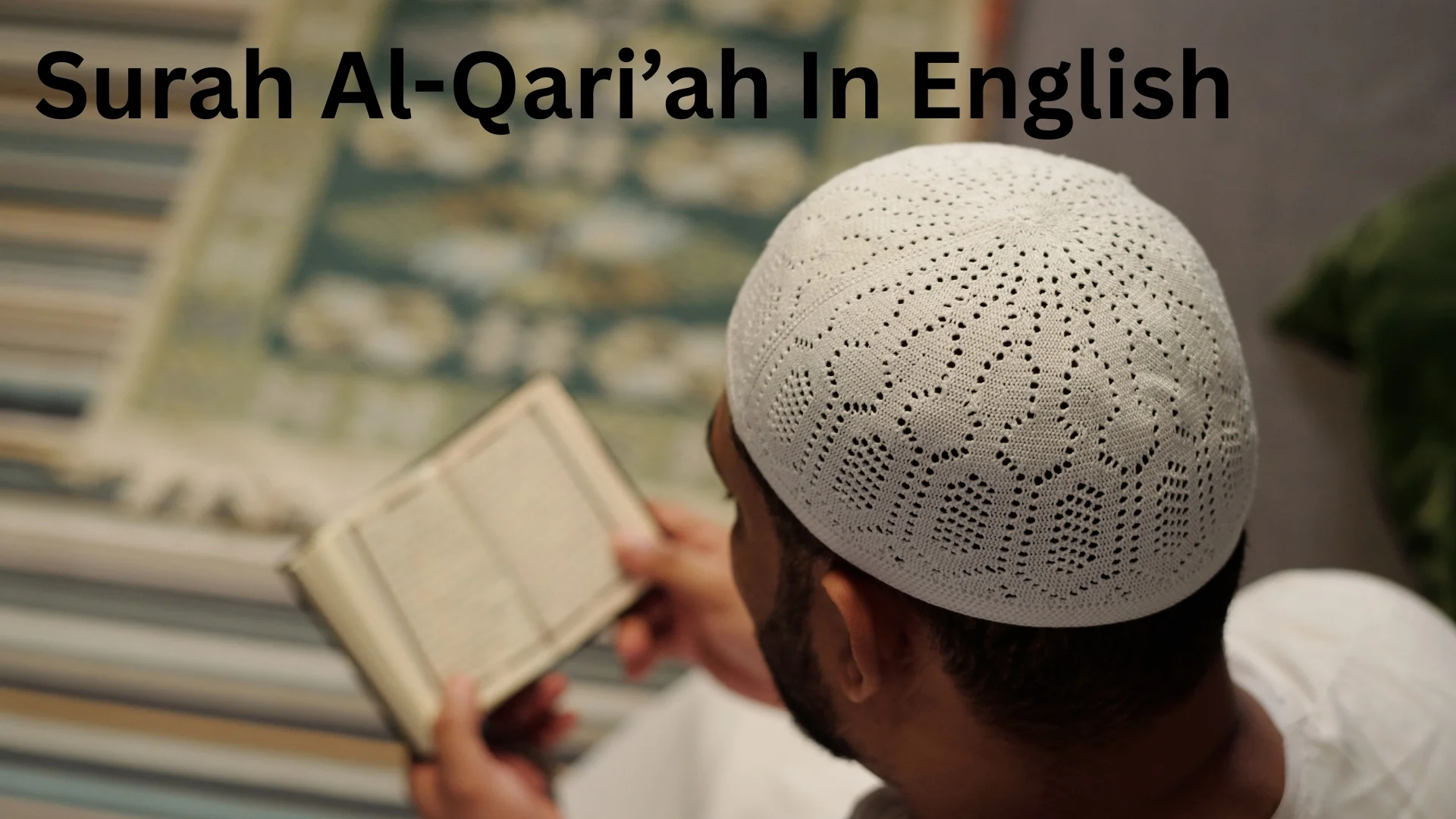
Surah Al-Qari’ah, the 101st chapter of the Quran, paints a powerful and unforgettable picture of the Day of Judgment. Its few verses are filled with profound imagery, describing a day when the world as we know it is turned upside down. This short yet impactful surah serves as a vital reminder of our ultimate accountability and the importance of living a life of purpose and faith.
This post will explore Surah Al-Qari’ah in english, providing a verse-by-verse overview and unpacking its key lessons. We will examine its themes, literary style, and the practical wisdom it offers for our daily lives.
What is Surah Al-Qari’ah?
Surah Al-Qari’ah is a Makki surah, meaning it was revealed in Makkah before the migration to Madinah. It consists of 11 verses and is named after its opening word, “Al-Qari’ah,” which translates to “The Striking Calamity” or “The Striking Hour.” The name itself captures the surah’s core theme: the sudden and cataclysmic nature of the Day of Judgment.
As one of the short surahs in the final part of the Quran, its message is direct and memorable, focusing on the concepts of divine justice and the weighing of deeds.

A Plain-Language Rendering of Surah Al-Qari’ah’s Meaning
Here is a simple rendering of the surah’s meaning in English:
- The Striking Calamity!
- What is the Striking Calamity?
- And what will make you know what the Striking Calamity is?
- It is the Day when people will be like scattered moths,
- And the mountains will be like fluffed-up wool.
- Then, as for the one whose scales of deeds are heavy,
- He will be in a life of pleasure.
- But as for the one whose scales of deeds are light,
- His home will be a pit.
- And what will make you know what that is?
- It is a blazing Fire!
Verse-by-Verse Overview and Tafsir
The surah uses a powerful structure to build suspense and emphasize the gravity of the event it describes. Let’s walk through its verses to understand its message.
Verses 1-3: The Alarming Question
The surah opens with a startling exclamation: “Al-Qāri’ah!” This is immediately followed by a question that deepens the sense of awe and mystery: “What is Al-Qāri’ah? And what will make you know what Al-Qāri’ah is?”
This rhetorical technique, asking a question and then emphasizing its unknowable magnitude, prepares the reader for something beyond human comprehension. The repetition of the word “Al-Qāri’ah” drills the name and its terrifying implication into our minds. It signifies an event so immense that no human experience can truly capture its reality.
Verses 4-5: The World Turned Upside Down
Next, the surah provides two striking images to describe the chaos of that Day.
The Day when people will be like scattered moths
This simile depicts humanity in a state of confusion and helplessness. Moths are drawn erratically to light, fluttering without direction. This image conveys people running in every direction, dazed and leaderless, in stark contrast to their organized, purpose-driven lives on earth.
And the mountains will be like fluffed-up wool
Mountains are symbols of stability, permanence, and strength. The Quran describes them as pegs holding the earth firm. On the Day of Judgment, these mighty structures will disintegrate into something as light and flimsy as carded wool, scattered by the wind. This powerful metaphor shows that everything we consider permanent and secure will vanish.
Verses 6-11: The Scales of Deeds and Final Judgment
After describing the cosmic upheaval, the surah shifts to the personal consequences for every individual. This is where the concept of the scales of deeds becomes central.
- Verses 6-7 (Heavy Scales): “Then, as for the one whose scales of deeds are heavy, he will be in a life of pleasure.” Those whose good deeds outweigh their bad deeds will be rewarded with a state of contentment, peace, and happiness in Paradise. The weight here is not just about quantity but the sincerity and quality of one’s actions.
- Verses 8-11 (Light Scales): “But as for the one whose scales of deeds are light, his home will be a pit.” In contrast, those whose good deeds are insufficient will face a grim destiny. Their “mother” or final destination will be “Hāwiyah” (an abyss or pit). When asked what this pit is, the surah concludes with a chilling, one-word answer: “A blazing Fire!” The use of “mother” (umm) to describe the pit is a powerful literary device, implying it will be the only home and embrace for those who end up there.
Key Arabic Terms in Surah Al-Qari’ah
Understanding a few key Arabic words deepens our appreciation of the surah:
- Al-Qāri’ah (الْقَارِعَةُ): “The Striking Calamity” or “The Great Clatter.” It comes from a root word meaning to strike or knock, suggesting a sound so loud it deafens and a shock so great it terrifies the heart.
- Al-farāsh al-mabthūth (الْفَرَاشِ الْمَبْثُوثِ): “Scattered moths.” This phrase captures the imagery of chaotic, aimless movement.
- Al-’ihni al-manfūsh (الْعِهْنِ الْمَنْفُوشِ): “Fluffed-up wool” or “carded wool.” This vividly describes the complete disintegration of the mountains.
- Mawāzīnuh (مَوَازِينُهُ): “His scales.” This refers to the divine scales that will weigh a person’s deeds with perfect justice.
- Hāwiyah (هَاوِيَةٌ): “A pit” or “abyss.” It is a name for Hell, emphasizing its depth and the sense of falling into it.
Lessons and Reflections from Surah Al-Qari’ah
This surah, though brief, offers profound lessons for believers.
- Remember Your Ultimate Purpose: The vivid depiction of the Day of Judgment reminds us that this worldly life is temporary. It encourages us to live with a sense of purpose, aware that our actions have eternal consequences.
- Focus on “Weighty” Deeds: The surah teaches us that not all deeds are equal. We should strive to perform actions that are “heavy” on the scales—those done with sincerity, for the right reasons, and with a positive impact. This includes acts of worship, kindness, charity, honesty, and seeking knowledge.
- Humility and Awe: The imagery of scattered people and crumbling mountains fosters a sense of humility before God’s power. It reminds us that our strength, wealth, and status are fleeting.
- Hope and Fear: The surah balances fear of punishment with hope for reward. This balance is crucial for a healthy spiritual life, motivating us to avoid sin while striving for God’s mercy and pleasure.
Conclusion
Surah Al-Qari’ah is a powerful wake-up call contained in just a few lines. Its message transcends time, urging every person to reflect on their life and ultimate destination. By describing the Striking Calamity, the chaos of that Day, and the final judgment based on the scales of deeds, it compels us to take our faith seriously. It is a reminder to fill our scales with good, sincere actions before we face the Day when only those deeds will matter.
FAQ
1. What is the main message of Surah Al-Qari’ah?
The main message is a stark reminder of the Day of Judgment, emphasizing the accountability of all human beings for their deeds. It highlights the outcomes: a pleasurable life for those with “heavy” scales of good deeds and a blazing Fire for those with “light” scales.
2. Why is Surah Al-Qari’ah called a Makki surah?
It is called a Makki surah because it was revealed to Prophet Muhammad (peace be upon him) in Makkah before his migration (Hijrah) to Madinah. Makki surahs typically focus on core tenets of faith, such as the oneness of God, prophethood, and the afterlife.
3. What does “scales of deeds” mean in Surah 101?
The “scales of deeds” (Mawāzīn) is a concept in Islam representing the divine and perfect justice of God on the Day of Judgment. A symbolic scale will weigh a person’s good deeds against their bad deeds to determine their final destiny in the hereafter.
4. What is the meaning of Al-Qari’ah?
Al-Qari’ah means “The Striking Calamity,” “The Stunning Blow,” or “The Great Clatter.” The name refers to the Day of Judgment, named for the terrifying sound and shock that will accompany its arrival, striking the hearts of people with fear.
5. What practical lessons can we learn from Surah Al-Qari’ah?
Practical lessons include living with an awareness of the afterlife, focusing on performing sincere and high-quality good deeds, cultivating humility by recognizing God’s ultimate power, and maintaining a healthy balance of hope in God’s mercy and fear of His justice.


