
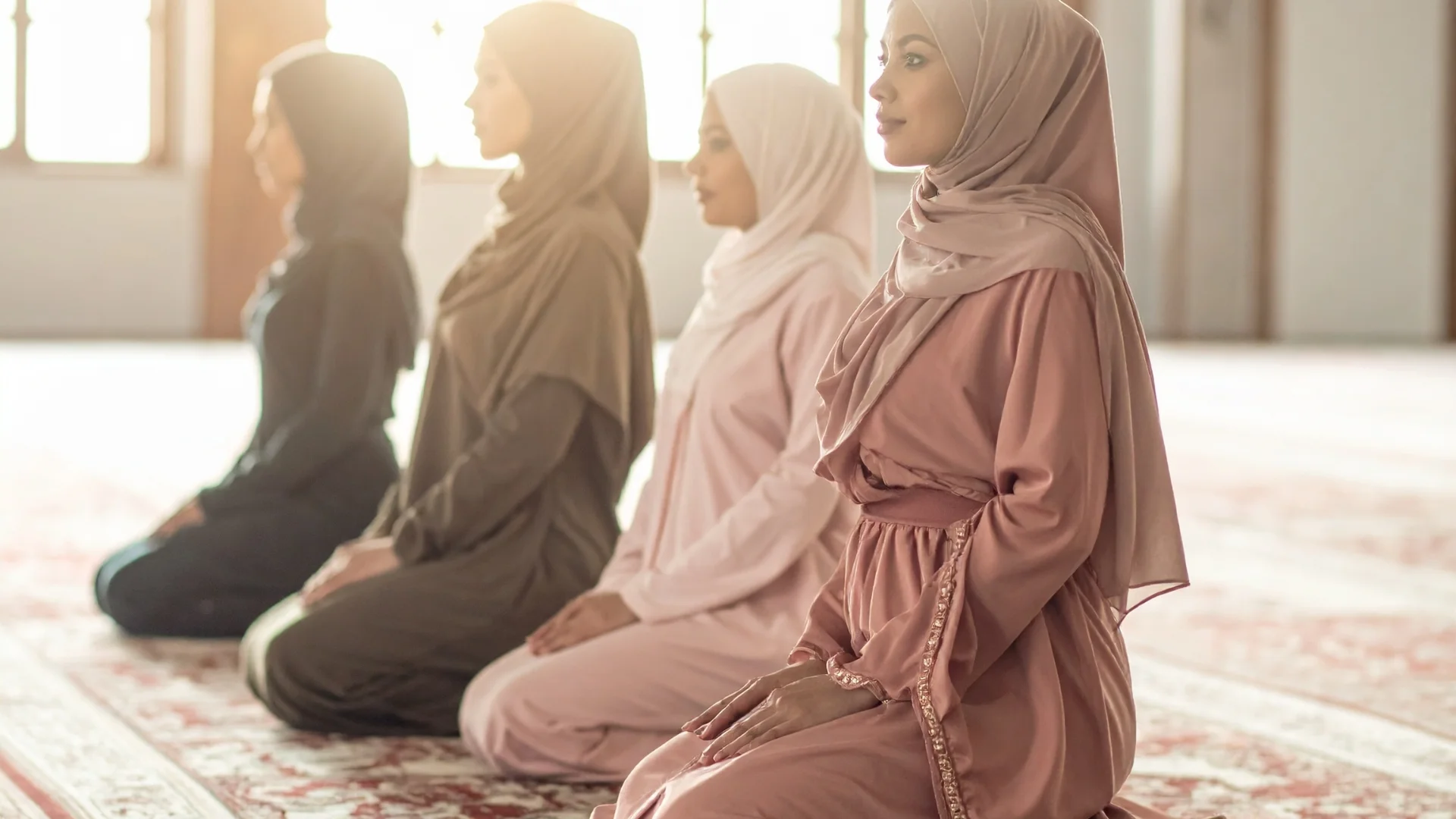
The role of women in Islam is a very popular and actively debated issue. In order to contextualize it, we need to examine foundational literature, history, and the various experiences of Muslim women throughout the world. The purpose of this post is to offer a balanced perspective whereby I am going to look at the rights, duties, and notable contribution of women as discussed in the Islamic teachings and history. We shall not only dwell on the conventional stereotypes, but also paint a more vivid picture of the position of women in Islam.
What is the Status of Women in Islam?
The Islamic religion assures the spiritual equality of men and women. According to the holy book of Islam, the Quran, both sexes were made out of one soul, and are equal before God. They are not valued in terms of gender, but based on their piety and righteousness. All rights and duties that women have in the faith are based on this principle of equality as a spiritual being.
The women are given a legal identity under the Islamic law or Sharia. Before the emergence of the Islamic faith, women in most societies were treated as property and they had minimal or no rights. The Islamic teachings brought radical changes, which gave women the right to own property, do business, be educated, and inherit within their families. These were radical rights of the era and a system of female independence.

Women’s Rights in Islam: A Closer Look
The right that Islam gives to women is holistic, touching on the personal, social, and economic aspects. They are not presents of the male family members, but they are god-given privileges that cannot be dispossessed.
Economic and Legal Rights
- Inheritance: Islamic law ensures that women inherit. Although the number of shares that will be given depends on the number of heirs and their relationship, the right is absolute.
- Ownership of Property: A Muslim woman is free to purchase, sell, and own property to her own. She has some money of her own and has no duty to use it on her family.
- The Mahr (Dowry): The bride needs to be provided with a wedding present, a nuptial gift, given by the groom at the time of matrimony. This is also an exclusive gift of her own and a source of financial protection.
Marriage and Divorce Rights
Islamic marriage is a mutual and contractual agreement. A female cannot be coerced into marriage. In a marriage, each of the two spouses is entitled to rights and accountability. Although divorce is never encouraged, it is allowed. Under some conditions, women are permitted to effect a divorce, which is referred to as khul’. This offers an escape route to women to abandon a marriage that is not working. [Internal linking proposal: Marriage in Islam.
Education and Work
Knowledge searching is one of the duties of every Muslim, irrespective of sex. The Quran and Hadith (sayings of Prophet Muhammad) are very much insistent on education. In the past, this resulted in the development of numerous women academics.
A woman also has the freedom to work and even take up a profession that is allowed by Islam as long as it does not contradict her family roles. A significant number of women have decided to work in different areas serving society without losing their faith.
Historical Role Models: Women in Early Islamic History
The history of Islam is rife with examples of powerful, influential women who made significant contributions to the formation. Their biographies refute a lot of notions about Islam and the role of women.
Khadijah bint Khuwaylid
The first wife of Prophet Muhammad, Khadijah, was a wealthy and reputable businesswoman in Mecca even before she got married. She was more senior than the Prophet and the one who offered to marry him. She was his most active champion, and her power and prudence played a very significant role in the first, the most trying years of Islam.
Aisha bint Abi Bakr
Another wife of the Prophet who is regarded as one of the most important in Islamic history is Aisha. She was famous in terms of her brilliant intellect and memory. She was a major teacher, scholar, and the transmitter of Hadith, especially after the death of the Prophet. However, he taught men as well as women, passed judicial decisions, and provided advice on an enormous spectrum of topics.
Other Notable Women
Numerous other women were leaders, warriors, scholars, as well as philanthropists. Umm Salama had the wisdom to advise the Prophet, and Nusaybah bint Ka’ab had to go to war defending the Muslim people. These facts of early Islamic history reveal that women were productive and appreciated members of society in all spheres.
The Hijab and Modesty in Islam
Modesty is a significant ideology in the Islamic religion among both men and women. In the case of women, this is most evident in the hijab, otherwise known as the headscarf. Hijab is not about oppression, but an individual declaration of faith and self. It is supposed to change the emphasis from the surface of a woman to her intelligence and personality.
The hijab experience and meaning also differ greatly among Muslim women. To most, it is empowering, a deliberate act to live according to the dictates of their own religion, and a denial of societal standards on appearance. Nonetheless, the fact that females in certain regions are pressured politically or socially in terms of dressing is also worth considering, which is not the same as the religious philosophy of hijab.
Modern Muslim Women: Navigating Faith and Society
Nowadays, Muslim women are participating in all the spheres of life imaginable, be it science and politics, art, or business. They are prime ministers, Nobel laureates, CEOs, and community leaders. This is how they can negotiate the challenges of contemporary life, yet continue to subjugate their faith to fit the current issues in the world and keep on interpreting the Islamic teachings.
The lives of Muslim women are not homogeneous. The culture, family, and education, as well as personal understanding of the religion, shape them. The only way to end the misconceptions is by listening to their various voices and appreciating their agency when it comes to defining their lives.
FAQs
1. Does Islam allow women to be leaders?
Yes. Although there exist varying academic views on some of the high-level political positions, history and the contemporary world abound with stories of women enjoying leadership positions in education, business, and community governance as Muslims.
2. Does it compel women to put on the hijab?
In Islamic law, the faith of a person should be heartfelt and voluntary. As such, a woman must not be compelled to wear the hijab. To the majority of its wearers, it is an individual and voluntary worship.
3. How are women treated in Islam in relation to men?
According to Islam, both men and women are equal before God. They play different roles and responsibilities in society, which are usually complementary yet none is superior to the other. They both are entitled to respect and justice.
4. Is it possible that a Muslim woman has her own money?
Absolutely. The Islamic law gives women complete financial independence. She is capable of earning, inheriting, and disposing of her personal wealth without the necessity of spending it on her family, but she can spend it on her family.
5. What is the Quran saying about the education of women?
The Quran and the Hadith highly recommend the pursuit of knowledge by both male and female Muslims. The religious requirement to educate does not have any gender difference.
The Islamic woman is a dynamic and multifaceted role; it is based on spiritual equality and justice. Through studying the Quran and Hadith, drawing on the experience of historical personalities and the voices of Muslim women today, we will be able to transcend the stereotypes and recognize the rich, diverse, and empowered lives they live.


