
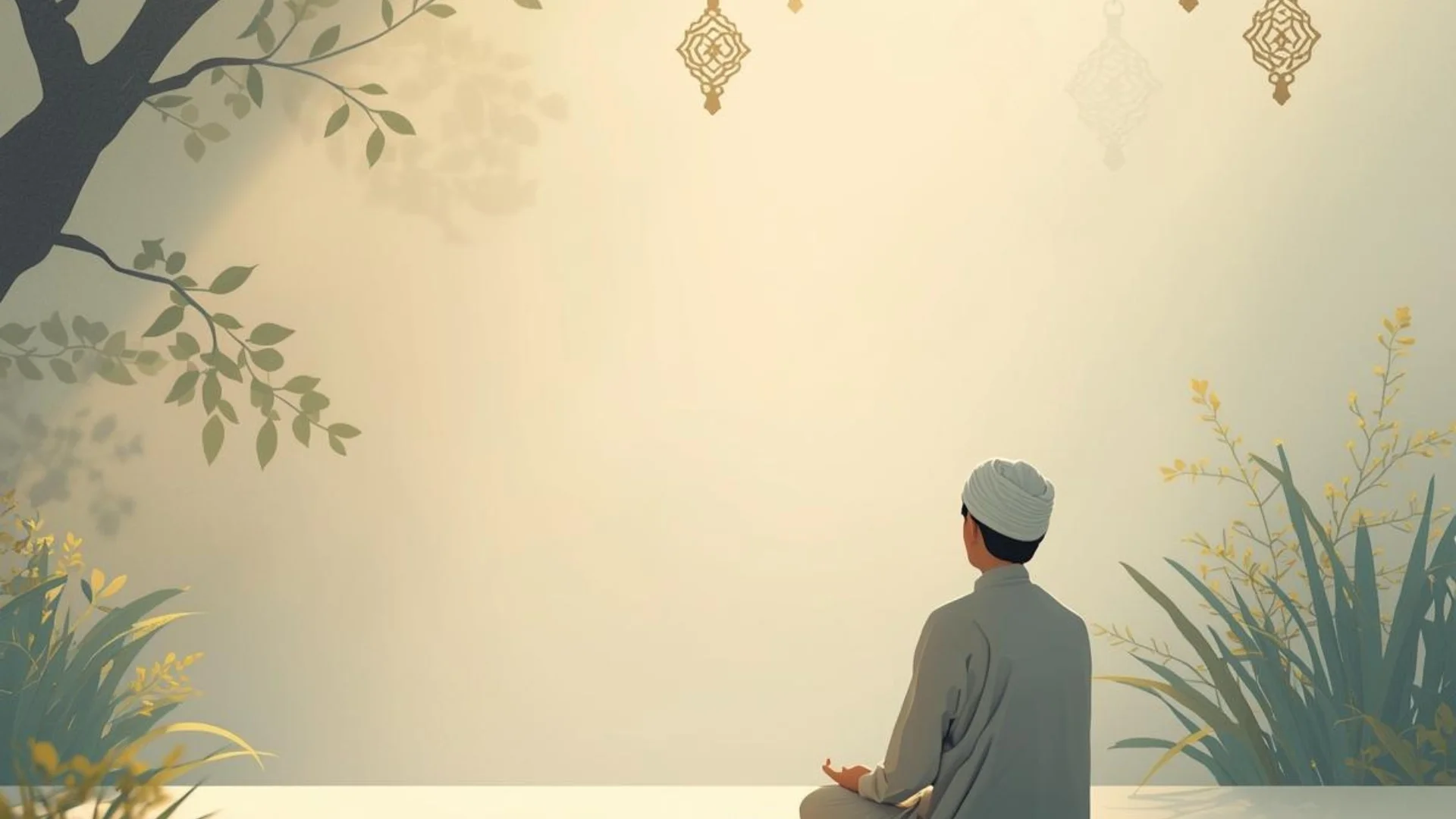
To begin with, Islamic meditation employs spiritual practices to achieve inner peace. These are remembrance (dhikr), contemplation (muraqabah), reflection (tafakkur), recitation of the Quran and mindful prayer (salat). The objective is to attain presence. You concentrate your mind and heart on God.
Then, scholars find obvious advantages in these old approaches. Research indicates that recitation of the Quran decreases anxiety. Dhikr assists in the creation of self-discipline during addiction recovery. Researchers observe that salat is a body-mind exercise that enhances flexibility. A single study of Tamarkoz meditation established that it decreased stress. It also elevated favorable emotions in students.
At last you will be able to find this calm. Start a simple daily routine. Focus on your breath. Chant a holy mantra for five minutes. This minute gesture creates concentration. It establishes some silence within you. You will become spiritually resilient. This is a way of achieving enduring inner strength.
The meaning of Islamic Meditation.
Islamic meditation cannot be considered single. It is a series of religious practices. The practices are meant to help one connect to the Divine. This aims at attaining a state of presence. You concentrate your heart and mind on God. This brings inner peace. It develops spiritual consciousness as well. The traditions are decades old in the Islamic tradition. They are means of mental, emotional, and spiritual well-being. They make individuals feel more centered. Therefore, they also aid individuals in dealing with stress in life.
Such practices are mostly referred to as spiritual meditative practices (SMPs). They are not just for Muslims. There are numerous ones with universal advantages. The core idea is remembrance. You recall your relation to some superior force. This memory assists you in shutting out the commotion of everyday existence. It introduces an atmosphere of peace and clarity.

Core Practices
Some major practices make up Islamic meditation. Both of them provide an alternative way to the same destination: proximity to the Divine.
Dhikr (Remembrance)
The most central practice is dhikr. The word means “remembrance.” It entails the repetition of religious phrases. These may be the names of God or brief prayers. Dhikr may be done either in silence or aloud. You can count on prayer beads. The monotony concentrates the mind. It prevents distracting mind. It leaves the heart with the feeling of tranquility. The Prophet Muhammad (peace be upon him) said the one who recollects God is like the living. The other who does not is the dead. This demonstrates the life-giving essence of dhikr.
Muraqabah (Contemplation)
Next is Muraqabah. This is a type of contemplative meditation. It means “to watch over.” The person sits quietly. They shift their focus towards themselves. They attempt to know how they feel internally. This is aimed at experiencing the presence of God as a watchful parent. Such awareness leads to self-control. It also allows you to keep track of your thoughts and emotions. It prompts you to be conscious of your deeds. Muraqabah is a kind of meditation. It puts you now in the here and now. It is of use in building a stronger rapport with yourself and the Divine.
Tafakkur (Reflection)
The habit of profound thought is called tafakkur. It is the reflection on creation. You may reflect on nature and universe or your life. Quran asks individuals to reason and think. Tafakkur is a way to do this. You see the world in which you live. You think of its beauty and complication. This leads to a sense of awe. It makes you understand more about the Creator. Tafakkur will make you notice the Divine everywhere. This is a practice that relates your intellect to your spirit.
Quran Recitation
The other effective practice is to hear or recite the Quran. The holy Quran is the book of Islam. Its chanting is deemed a kind of dhikr. The rhythm and the sound of the recitation are soothing. Numerous researches indicate that listening to Quran may decrease anxiety. It lowers stress levels. The chanting to the tune of the melodies subsides the mind and body. The practice is readily available. The language does not have to be familiar to you in order to experience its advantages.
Salat (Mindful Prayer)
The prayer Muslims perform is called salat, the ritual praying Muslims perform five times a day. It is a mind-body meditation. It is a combination of physical postures and recitations. The movements involve the standing, bowing, and prostrating. This juxtaposition forms a state of mind. Salat interrupts the day. It offers encounters of calmness. It helps the individual be in touch with their spiritual place. The physical movements resemble certain yoga poses. They are able to enhance flexibility and minimize the tension of the body.
Health Benefits of Islamic Meditation
These ancient practices are beginning to be studied by modern science. The results are promising. It has been found that the Islamic meditation does have actual health effects.
Physical Outcomes
Recitation of Quran has also been found to reduce heart rate. It is also able to lower blood pressure. It aids in stabilization of other vital signs. This particularly is useful with patients who are under stress. As an example, individuals subject to intensive care unit or surgery experienced fewer anxieties when they listened to recitation of the Quran. Dhikr exercises, particularly the ones with regulated breathing, have a calming effect on the nervous system. They lessen the stress reaction of the body. This may result in stress hormone levels such as cortisol to decrease.
Psychological Outcomes
There is also the mental health benefit. Islamic meditation helps in the alleviation of anxieties and depression. The concentration needed in dhikr and muraqabah assists in the discontinuation of negative thinking processes. It offers the mind one calm and still focus. This is quite beneficial to individuals who are not coping with anxiety or depression.
The studies on the recovery of addictions have been positive. Some countries have rehabilitation centers that apply dhikr therapies. These treatments assist patients to have more self-control. They acquire the courage to get rid of their addictions. The rituals give a feeling of point. They help to relate individuals to a positive spiritual system. A recent research even determined that one of the Islamic meditations known as Tamarkoz reduced stress and increased positive feelings in university students.
How to Practice Safely
A simple type of Islamic meditation can be practiced today. The following is a routine that you may adhere to.
- Select a Favorable Location: Find a place where you will not be bothered. This helps you focus.
- Bring a Will: Start by determining your intention. You would want peace, light or an association with the Divine.
- Sit Comfortably: Sit in the chair or in the middle of the floor. Keep your back straight in a relaxed manner.
- And pay attention to Your Breath: Turn off your eyes. Take a few deep breaths. Experience the breath in and out of your skin. Resort to breathing naturally.
- Anwar Dhikr: Repeat quietly or softly: Say a few simple words. You may say Allah (God) or any other name that is holy. It is also possible to say something like SubhanAllah (Glory to God). Repeat it at a gentle pace.
- Release Surpassions: You will think. This is normal. Whenever you find yourself thinking, make an effort as you bring focus once again to your breath and your dhikr phrase. Do not judge yourself.
- Repeat: Begin with a brief session of 5-10minutes. You can take your time slowly, and you become comfortable.
- Close with Gratitude: After you are done, sit still for a minute. Be grateful for this peace of being.
Tips and Cautions:
- Be consistent. Enhance having a regular practice time.
- Be patient. The benefits build over time.
- In case of a serious mental health problem, the practices are to be used together with professional care and not be used to substitute it.
There are advanced Sufi practices, which demand the guidance of a qualified teacher. Begin with simple and universally safe procedures such as simple dhikr and Quran listening.
FAQs
Am I required to abide by the Muslim faith?
No. Most of the practices, such as listening to Quran recitation or mere dhikr, have universal means of reducing stress.
What in case I do not know any Arabic phrases?
God can be described in your own language using a simple word. The most important thing about the remembrance is the motive.
Is this not different from other forms of meditation?
The primary distinction is the focus. The Islamic meditation is a God-focused process. It aims at creating a relationship with the Divine. Secular mindfulness is concerned with current moment awareness but has no spiritual aspect.
An Emerging Viewpoint on Mindfulness.
Islamic spirituality has a vast, time-tested way to inner peace. They offer such tools that are not only easy but profound as well. These methods are not merely processes of mind calming. They invite the heart to open. They give you a feeling of purpose and belonging to your inner world. The real singularity in this journey is not only in the elimination of the stress of the mind, but putting a sense in the heart. When you make remembering it a daily routine, you do not merely get moments of peace. You develop a spiritual strength that helps you to endure throughout all your issues in life.


