
اسلام کے سات ستون کیا ہیں؟
Islam is based on fundamental principles. These are its pillars. They facilitate the religion of believers. The Five Pillars are very well known to many Muslims. There are seven pillars of Ismaili Shi and the Shiite tradition. This system helps us to lead a spiritual and practical life. The Shahadah, or the profession of faith, is not a pillar. These seven pillars are all based on it. This structure was described by the fourth Imam, Muhammad al-Baqir. He explained that there are seven pillars about Islam. This paper discusses these seven key practices. It describes their importance in Islam.
اسماعیلی اسلام کے سات ستون ایک مکمل زندگی گزارنے کا فریم ورک فراہم کرتے ہیں۔ یہ ستون ایمان کے بنیادی اصول ہیں جو روحانی اور عملی زندگی کی رہنمائی کرتے ہیں۔
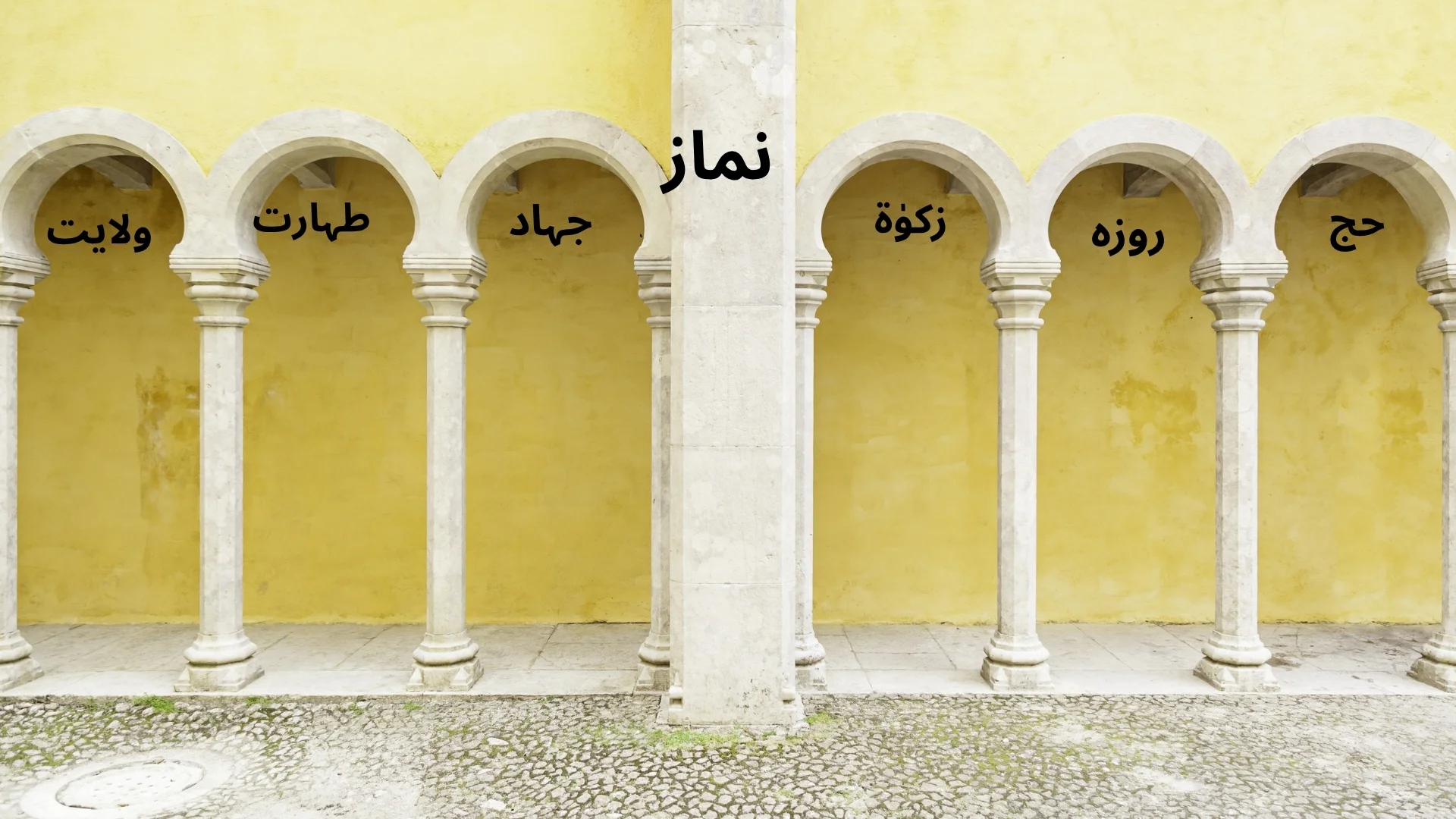
- ولایت (Walayah): امام کی رہنمائی اور خدا، نبی اور امام سے محبت اور وفاداری۔
- طہارت (Taharah): جسم، روح اور عقل کی پاکیزگی۔
- نماز (Salat): خدا سے رابطہ، ظاہری اور باطنی عبادت۔
- زکوٰۃ (Zakah): دولت کی پاکیزگی اور سماجی فلاح و بہبود کے لیے عطیہ۔
- روزہ (Sawm): جسمانی اور روحانی ضبط نفس، دنیاوی خواہشات سے پرہیز۔
- حج (Hajj): ظاہری اور باطنی زیارت، امام سے قربت۔
- جہاد (Jihad): نفس کی برائیوں کے خلاف جدوجہد اور علم و سماجی بہتری کے لیے کوشش۔
یہ ستون ایک متوازن زندگی کی تشکیل کرتے ہیں، جہاں ظاہری اعمال اور باطنی روحانیت ہم آہنگ ہوتی ہیں۔

7 Pillars of Islam
1. Walayah (Guardianship)
The most significant pillar is Walayah. It denotes respect and affection. This is the devotion that is given to God. It extends to God’s prophets. It contains the sacred scripture. More importantly, it entails a total dedication to the Imam of the period and his representatives. The Imam is an heir of the Prophet Muhammad through his daughter Fatima and son-in-law Ali ibn Abi Talib. According to the Ismaili faith, the Imam guides the people. He deciphers the faith as it is understood nowadays.
The Quran states that the Prophet has more authority over believers than they do. This power or walayah was transferred to Imam Ali and then to his inheritors. People cannot have a direct look at God. They obey the Prophet. Because of the fact that the Prophet is not present physically anymore, this obedience is provided to the Imam of that time. He is the Ulu’l-Amr, or the possessor of power. This pillar makes the faith alive and dynamic. It is a transformation through the direction of the Imam. Walayah is the key. It opens the real knowledge of all other pillars.
2. Taharah (Purity)
Taharah means purity. This is not just about physical cleanliness. It is an all-inclusive state of being. The purity, according to the Ismaili thought, is stressed in three dimensions. The former is the cleanness of the body. This is in regard to ritual washing and physical hygiene. Water cleanses the body.
Purity of the soul is the second one. Good deeds are attained to get a pure soul. It is a product of God-remembrance, or zikr. It is an act of not having bad traits such as anger and intolerance. The third is purity of the intellect. It is the quest of the truth and the comprehension of the inner messages of faith. According to the Quran, God is the one who is fond of those who cleanse themselves. Taharah refers to the purification of the body, mind, and spirit. It equips a believer to be in a closer relationship with the divine.
3. Salat (Prayer)
Salat means prayer. It is a direct contact with God. Prayer form and style may change. Nizari Ismailis feel that the Imam of that era is entitled to appoint the mode of prayer. The existing prayer is referred to as the Du’a. It is repeated three times a day. These intervals are in line with those described in the Quran: before sunset, after sunset, and at the time close to the sunrise.
Salat is not merely a ritual to the Ismailins. It is the condition of constant remembrance of God. The physical prayer is the external appearance. The inner one is to always remember God in the heart and mind. It is this awareness that is the real meaning of Salat.
4. Zakah (Charity/Purification)
Zakah refers to charity or purification dues. It is a predetermined percentage of savings in most of the Muslim practices. The Ismaili version of it assumes a rather different form. It incorporates khums among the Shia. This entails giving away part of income to the Imam. Nizari Ismailis give away a percent of their net income.
It is done on the Quranic directive that the Prophet should impose dues to the faithful. This action cleanses them and makes them become spiritual. They contribute towards organizations such as Aga Khan Development Network. This is one of the largest private welfare systems in the world. It operates educational, hospitals and economic development initiatives. Zakah is a way of cleansing wealth. It is also a social and economic developmental tool. It brings cheer to the whole society.
5. Sawm (Fasting)
The practice of fasting is known as Sawm. It is literal and metaphorical at the same time. The literal meaning entails fasting. This is a lesson in discipline, empathy and thankfulness.
The esoteric or metaphorical meaning is also significant. This is a fast of the soul. It is denying the worldly distractions. It is of shunning evil acts, thoughts and words. This religious fast does not take place over one month. It is a year-round commitment. It is an unending attempt to cleanse the heart. So, it is a deeper fast that assists a believer to get divine truth. It is concerning the desire to achieve spiritual purity on daily basis.
6. Hajj (Pilgrimage)
Hajj is the act of pilgrimage. To most of the Muslims, this is the expedition to the Ka’ba in Mecca. The Kaaba is the corporeal House of God. The Islamic Muslim Ismailis also value the significance of the trip. They refer to it as the Hajj-i-Zahiri or the external pilgrimage.
An inner pilgrimage is also present. This is the Hajj-i-Batini. The pilgrimage will be in the presence of the living Imam. This pilgrimage has spiritual direction. It enhances the relationship between the Imam and the believer. The Hajj, in full sense, is not only a physical trip, but also a spiritual experience.
7. Jihad (Struggle)
Jihad translates to struggle or to strive. It has two primary meanings. The lesser struggle (jihad-i-asghar) is a physical struggle. It is a struggle to save the religion against foes. The more significant one is the Greater Struggle (jihad-i-akbar). This is an internal struggle. It is struggle with the negative tendencies of oneself. It is a conflict against individual vices such as greed, hatred and ignorance. This is a lifelong struggle. Jihad is also another form of Ismailis. It is jihad of knowledge and that is to learn and to teach. There is the material jihad, which is to apply resources to good. This pillar challenges the believers to always endeavor towards self and social betterment.
A Framework for Life
Seven Pillars of Islam are not just a list of obligations. They represent a whole complex of living a meaningful life. Therefore, they are not isolated acts. They are principles that are related to one another. Walayah offers the directing power. Taharah makes sure that it has a clean foundation. Salat enables the individual to always be in touch with God. Zakah cleanses wealth and creates society. Sawm helps one practice self-control. Hajj is a pilgrimage towards the spiritual center. Jihad is the never ending struggle towards improvement.
These are not just pillars that are used to support a faith. They build a person. They cultivate a community. Therefore, they provide a way that gives equilibrium between the outer practice and inner spirituality. According to the Ismaili interpretation, faith is not a fixed set of rules. The truths that are eternal are its roots. Its branches the pillars adapt and bear fruit in all seasons, directed by the Imam who is alive. This makes Islam a relevant, caring and intellectual force of the world that is good.


