
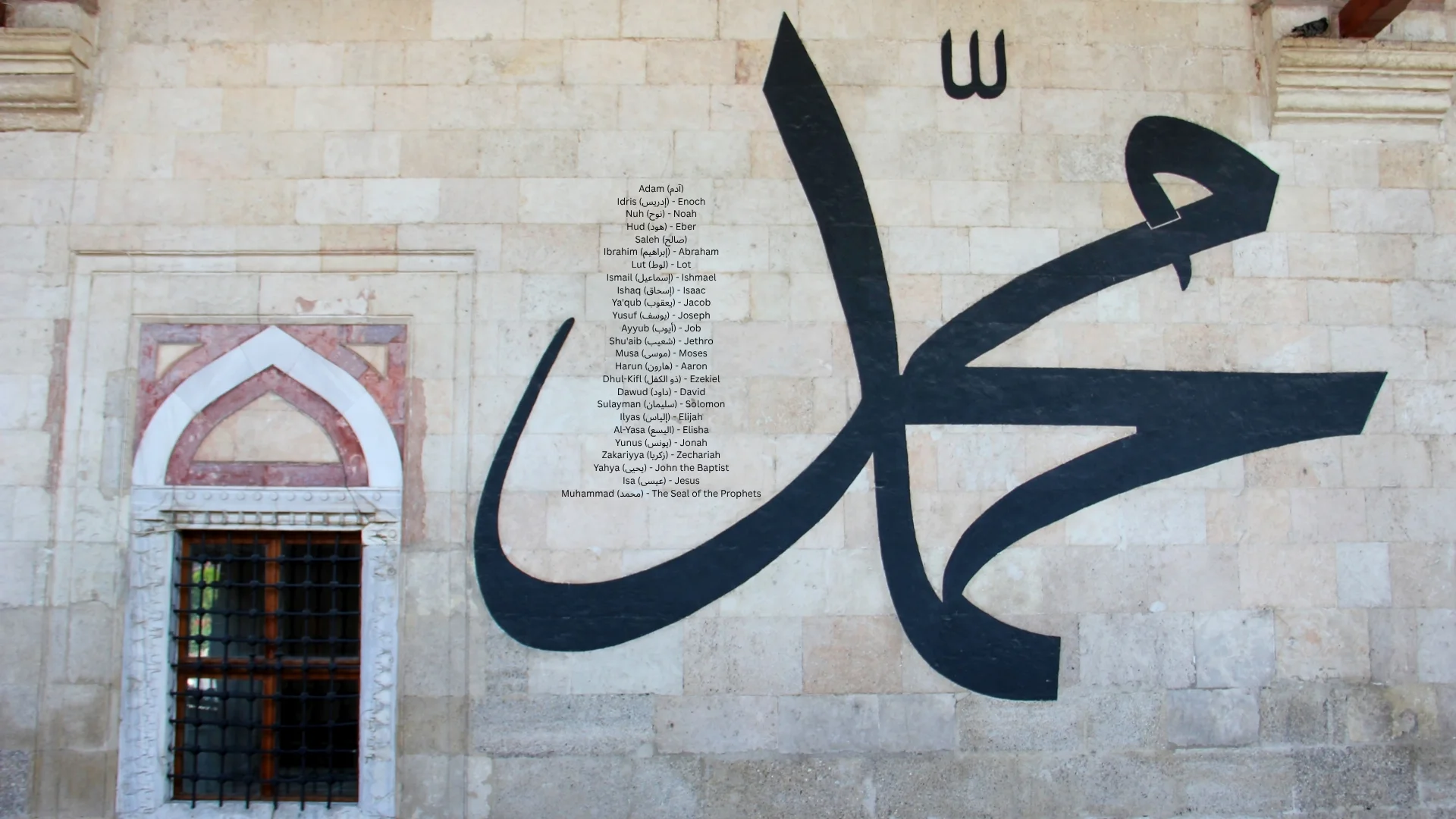
Names of Prophets in Islam: In the Islamic religion, prophethood is a pillar of belief. This is based on the perception that God tried to send messengers in the past to guide human beings. However, the selection of these people was aimed at conveying one strong message: serve the one true God. Therefore, this paper shall discuss the names of prophets in Islam, their 25 names with an in-depth meaning, which are mentioned in the Quran.
You will learn about:
- The place and role of prophets in Islamic culture.
- The accounts and missions of the 25 prophets who are mentioned in the Quran.
- The never-ending asylum of guidance they stand to all humanity.
Prophethood in Islam
A prophet in Islamic terms is referred to as a Nabi, and a messenger as a Rasul. As all messengers are prophets, not all prophets are messengers. A messenger usually introduces a new divine law or scripture, whereas a prophet renews the divine teachings in existence. These individuals chosen were human beings, and they were chosen because of their extraordinary character, integrity, and piety.
They were sent by God to various countries at various times. They were mostly meant to remind man about his Creator, summon him to justice, and rebuke him against doing wrong. Therefore, the belief in all these prophets without any distinction between them is the key article of faith of Muslims. Thus, knowing the names of prophets in Islam and their stories would give one insight into this fundamental principle.

The 25 Prophets in the Quran.
Therefore, the Quran, the holy book of Islam, recounts the life stories of 25 prophets. Throughout its chapters, they are also interwoven and have become examples of faith, patience, and perseverance of those who believe in them.
From Adam to Nuh
1. Adam (آدم)
Adam is the original man and the original prophet. God is the one who made him and his wife out of clay, and they spent time in paradise before they were sent to Earth due to an ungodly action. Thus, his experience is a great lesson of repentance and the infinite forgiveness of God. He is also the progenitor of the entire humankind.
2. Idris (إدريس) – Enoch
Idris was a truthful and wise man, to whom God raised him to a superior rank. He is linked with knowledge, and some of the traditions believe that he invented the early forms of writing.
3. Nuh (نوح) – Noah
Nuh was a prophet who propagated the gospel to his people over a period of time of 950 years, but a majority turned him down. After God ordered him to do it, he constructed an ark in order to save the believers and two animals of all the animals during a great flood. Thus, his example is a great patience and faith in the plan of God.
4. Hud (هود) – Eber
Hud was taken to the mighty and proud of themselves, the Ad people, who erected great edifices and could not worship God in solitude. When they refused to accept his message, they were swept away by a furious wind, and only two people, Hud and his followers, escaped.
5. Saleh (صالح)
Saleh was preaching to the people of Thamud. God sent a miraculous sign that was a miraculous she-camel from a rock, and warned them against injuring her. Therefore, they defied and slew the camel, and their destruction was caused by a dreadful earthquake. Thus, defiance and arrogance are discouraged in the story by Saleh.
The Patriarch Ibrahim and His Family.
6. Ibrahim (إبراهيم) – Abraham
One of the most respected prophets is Ibrahim, who is referred to as Khalilullah (friend of God). He denied the idolatry of his community and preached absolute monotheism. His readiness to sacrifice his son to test his faith is revered in Islam, and he reconstituted the Kaaba in Mecca, which was the key event in the history of Islam. So, he is the ancestor of many names of prophets in the Islamic world.
7. Lut (لوط) – Lot
Lut is a nephew of Ibrahim and was dispatched to the Sodom people, who were involved in serious crimes. He cautioned them against altering their way,s but they did not listen. God devastated their cities, and it is significant to note that moral purity is essential.
8. Ismail (إسماعيل) – Ishmael
Ibrahim was the first son of the family, and Ismail was his son who displayed supernormal strength when it came to the test of sacrifice. He helped his father in the reconstruction of the Kaaba, and the last prophet, Muhammad, was his descendant.
9. Ishaq (إسحاق) – Isaac
The second son of Ibrahim was called Ishaq, who was also a prophet. God blessed him and his lineage, and numerous Israelite prophets were of his ancestry.
10. Ya’qub (يعقوب) – Jacob
Ya’qub or Israel was the son of Ishaq. His twelve sons were the forefathers of the twelve tribes of Israel. His life was also characterized by challenges, which he went through and stayed faithful to his faith.
11. Yusuf (يوسف) – Joseph
The story of Yusuf is one of the most elaborated stories in the Quran. Being thrown in a well by his jealous brothers and sold into slavery in Egypt, he attained a great status of authority because of his own honesty and faith in God. He eventually reconciled with his brothers, and this has given a great lesson of trust and forgiveness.
Oracles of Foresight and Leadership.
12. Ayyub (أيوب) – Job
The personification of patience is Ayyub. He lost his wealth, family, and health, yet he never gave up in his faith in God. Therefore, the best thing about his story is that his uncompromising faith paid off as God reinstated his blessings to him.
13. Shu’aib (شعيب) – Jethro
Shu, Aib was dispatched among the people of Midian, who were notorious in regard to dishonesty in business and commerce. He invited them to reason and justice but they did not listen, and it is their downfall.
14. Musa (موسى) – Moses
One of the prophets who is mentioned the most in the Quran is Musa. He was sent to the oppressive Pharaoh of Egypt, and he brought the Children of Israel liberty. God also gave him the Torah (Tawrat); his life was the message of his fight against oppression.
15. Harun (هارون) – Aaron
Harun was the brother and a loyal companion of Musa. He was also a good orator and helped Musa in his quest to Pharaoh and accompanied him on the way to their people.
16. Dhul-Kifl (ذو الكفل) – Ezekiel
Dhul-Kifl is briefly mentioned in the Quran, being glorified for being patient and steadfast. Thus, as his name implies, he was a man who made good on his promise. Other scholars also believe that he is the biblical prophet Ezekiel.
Kings and Messengers
17. Dawud (داود) – David
Dawud was a prophet as well as a righteous king. He received the Zabur (Psalms), and was famous for his beautiful voice praising God. However, his judiciousness as a king is a common Islamic motif.
18. Sulayman (سليمان) – Solomon
Sulayman was the son of Dawud, and he inherited his kingdom and received infinite powers from God, such as controlling the wind, jinn, and speaking to animals. He also constructed the first temple in Jerusalem.
19. Ilyas (إلياس) – Elijah
Ilyas used preaching to denounce the worship of an idol that his people were worshiping, that of Ba’l, and instead, he brought his people back to the worship of the one God. It is also a story of a fight against paganism and falsehood.
20. Al-Yasa (اليسع) – Elisha
Ilyas was followed by al-Yasa, who went on with his task of leading the Children of Israel. His memory is that of a righteous and pious man of God.
21. Yunus (يونس) – Jonah
Yunus was referred to the city of Nineveh. When his people first turned him off, he went away furious and was seized by a big fish. He made his sincere repentance in the belly of the fish, and God spared him. His people ultimately learned their lesson, and his story is an effective lesson of repentance and the mercy of God.
The Final Prophets
22. Zakariyya (زكريا) – Zechariah
Zakariyya was the protector of Maryam (Mary, the mother of Jesus). He had been praying to God to give him a son, which God miraculously had to granted him in his old age, Yahya. His life is a lesson in the greatness of an honest prayer.
23. Yahya (يحيى) – John the Baptist
Zakariyya had a son, Yahya, who was given Prophethood and wisdom at a tender age. He was the one to affirm the message of Isa (Jesus), and he was a known pious and soft personality.
24. Isa (عيسى) – Jesus
Isa is one of the most renowned messengers in the Islamic religion and was conceived of the Virgin Maryam through a miracle. He did numerous miracles through the will of God and was given the Injil (Gospel). Muslims do not think that he was crucified but rather raised to the heavens by God, and he will come before the Day of Judgment.
25. Muhammad (محمد)
Muhammad is the accuser, the Seal of the Prophets. He was also dispatched to all humanity with the ultimate revelation, the Quran. His life is a comprehensive and practical example that Muslims can refer to,o and he left a community based on faith, justice, and love.
A Chain of Continuous Guidance.
The names of the prophets in the Islamic religion are not an array of individual religions, but rather connections in one continuous chain of Godly guidance. Therefore, all the prophets verified the truth introduced by the predecessor and set the stage for the coming one. Their various lives, such as being kings and warriors or shepherds and preachers, demonstrate that God has a message that transcends a nation or age. Thus, this continuous chain is an object of mercy and care of God towards humankind, which constantly provides them with a direction to follow.


