
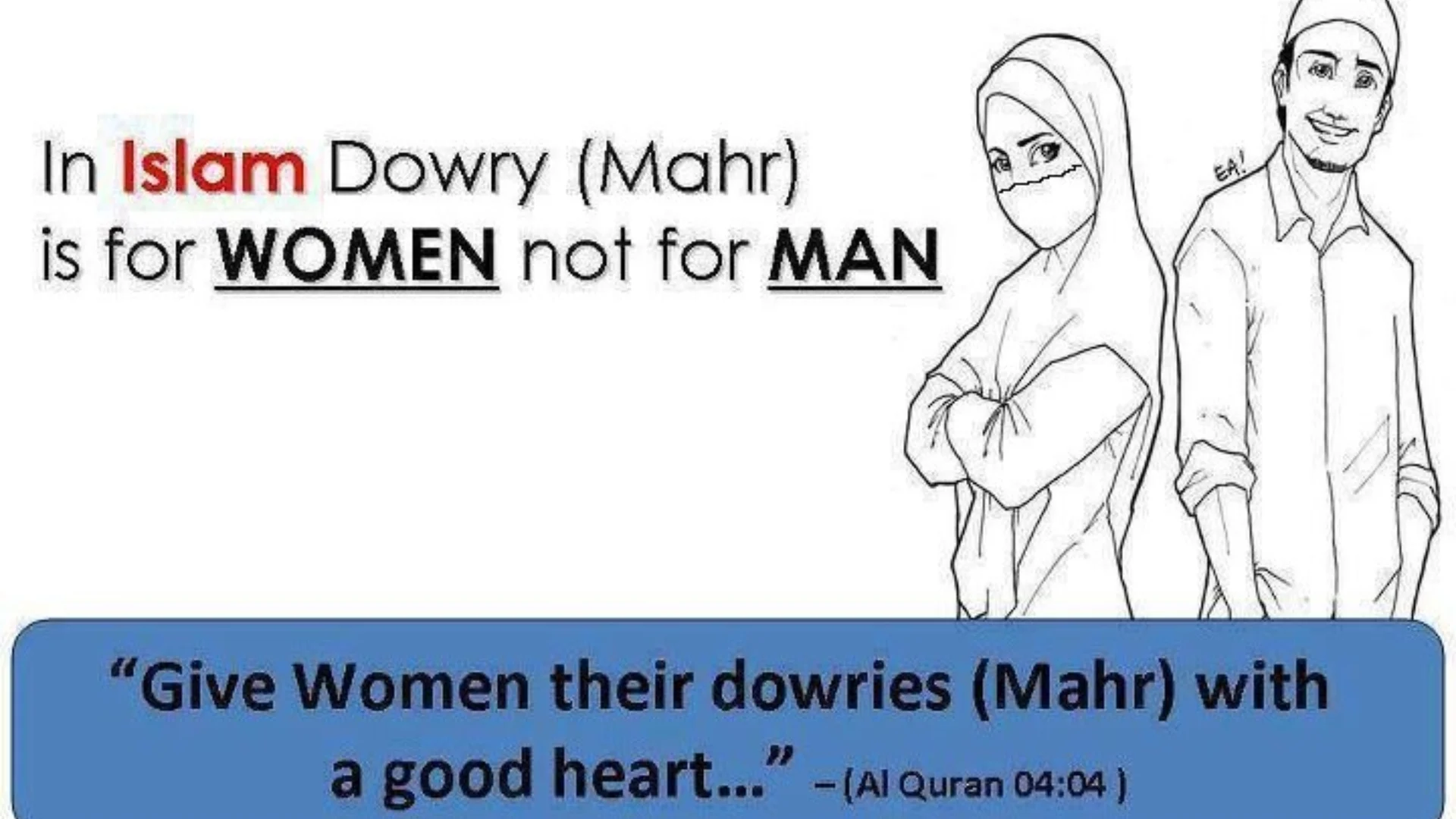
Mahr is one of the main aspects of the Islamic marriage. Mahr is Islam is an obligatory present of the groom to the bride. This present is an emblem of honor and devotion. The Mahr is rendered the only property of the bride. She has full control over it. This habit makes her financially independent. Islam allows women the right to be guaranteed certain fundamental rights. This requirement is also mentioned in the Quran several times. Thus, it is not a cultural practice. It is a religious obligation.
In this post, Mahr will be expounded. We shall discuss its meaning, types, and rules. You will also get to know about its historical background. We are also going to speak about its contemporary applicability.
What is Mahr?
A price entailed by law. It is presented by the groom to the bride. This occurs during the Islamic wedding, which is the Nikah. The marriage contract specifies it. The Mahr can be money. It may also be property, jewelry, or even a non-material gift. Therefore, the type of Mahr is negotiated between the bride and the groom.
Mahr is confused with other terms by people. It is not a dowry. Dowry refers to a gift made by the bride’s family to the groom. Mahr is also not a bride price. A bride price is what is paid by the groom to the family of the bride. Mahr approaches the bride directly. It guarantees her financial security. It helps out when there is a divorce or the death of the husband. Thus, this right is absolute. Therefore, the husband has no right to a portion of his wife’s Mahr.

Historical Roots of Mahr
The bridal gift is not something invented by Islam. Bride price was practiced among the pre-Islamic Arabs. A payment was made by the groom through the guardian of the bride. Therefore, the bride herself was frequently nothing. Islam also changed this practice. It offered the payment in the form of a gift to the bride. This was a revolutionary change. It also provided women with property rights and financial freedom of finance.
The innovation of the Quran made Mahr the property of the wife. This was the giant jump in the cause of women. The tradition has similarities to other practices. A bridal gift is also known as the Hebrew term: mohar. With Tim, the two concepts changed. Therefore, the gift was left to the sole proprietorship of the bride. Thus, this change underscores the issue of women’s financial security in religious law.
Types of Mahr
Mahr is not that which fits all. It takes various forms and payment systems. It is significant to understand such types. They provide a bit of flexibility to the couple.
Mahr al-Musamma
This is the specified Mahr. During the pre-marriage period, the couple agrees on the amount and the nature. It is committed to a marriage contract. The Mahr al-Musamma has no limit. The Quran talks of the provision of a heap of gold. Therefore, this indicates that huge sums are allowed. The degree of the lower limit varies across the schools of Islamic thought. It is said that anything worthy is good. Other individuals give a minimum limit, such as ten gold coins (dirhams). Thus, the item must be lawful (halal). Its value should be clear.
Mahr al-Mithl
The equivalence Mahr of equivalence. It is applicable in definite circumstances. A matrimonial contract by itself is valid in the absence of a definite Mahr. Mahr al-Mithl is, in this case, determined. Therefore, this value depends on the Mahr of the female kin of the spouse. Her sisters, her aunts on the paternal side, or other peers are taken into consideration. They also depend on the level of their social status, education, and their personal qualities. This is aimed at an acceptable and fair Mahr. This kind is used as well when the stated Mahr was illegal, such as alcohol.
Mahr Payment Structures
There are two possible ways of arranging the payment of Mahr. This gives financial planning opportunities to the couple. Both the Mahr are legally obliged debts.
Mu’ajjal (Prompt Mahr)
This is the part of Mahr that is paid immediately. During the marriage ceremony, the bride is given it. It is an immediate gift. This is to enable her to possess assets immediately she gets married. The price is pre-determined.
Mu’akhar (Deferred Mahr)
It is what part of the Mahr is deferred. A future payment date is settled on by the couple. This may be a certain time or date. It usually is when divorce is involved or when the husband dies. The postponed Mahr serves as a security for the wife. It will guarantee her financial security in case the marriage fails. The obligation to make payment is a liability. It should be paid in the property of the husband before other debts are paid in case of his death.
The Rules and Significance of Mahr.
Mahr is also a financial transaction. It is one of the pillars of the Islamic marital contract. There are a number of rules that regulate its usage.
The Wife’s Right to Refuse
A wife is at liberty to deny marital intercourse until she includes her timely Mahr. All major Islamic schools of law acknowledge this right. In case she declines on this ground, she has to be maintained by her husband. The right of refusal in this particular case is usually forfeited once she receives the Mahr or voluntarily consummates the marriage.
Mahr in Case of Divorce
The Mahr regulations during a divorce are definite. In case of divorce of the wife before the consummation of the marriage, the wife is supposed to get half of the stated Mahr. This is explicitly written in the Quran. Assuming that the marriage had been consummated, she has a right to the entire Mahr, including deferred and immediate. In case of the wife wanting to get a divorce (khul), she might be required to give up her deferred Mahr as compensation to the husband. Various schools of thought on law have not been consistent on this.
Mahr and Inheritance
The Mahr of a wife does not have anything to do with her inheritance. When her husband dies, she is supposed to get her entire, unpaid Mahr. This is a liability to his estate. It has to be paid, and then the inheritances are distributed. She also gets her allotted portion of his residual estate as an heir after being given her Mahr. The combination of these two rights grants a widow much financial security.
Setting the Mahr Amount
It is the subject of discussion as to the amount of Mahr. There is no limit, but Islamic tradition promotes moderation. The most preferable Mahr is the one that the husband can pay conveniently. The Prophet Muhammad promoted simplicity. High Mahr requirements may prove distressing. They may prove to be an obstacle to marriage among the youth. This is aimed at honouring the bride, not to put a strain on the groom. The perfect Mahr is a compromise between respecting the wife and being practical to the husband.
Conclusion
Mahr in Islam is not a price for a bride. It is an honor for her. This is a Quranic doctrine that sets a woman high in a marriage. This gift makes her a reputable partner who has a financial identity of her own. It goes beyond a mere financial arrangement. Mahr is the first stone in the foundation of the matrimonial home, the home founded on the respect of the husband for the wife and his loyalty to the wife’s security. It is a classical Islamic practice that will enable women by giving women a dignified and just start to the marriage relationship.


