
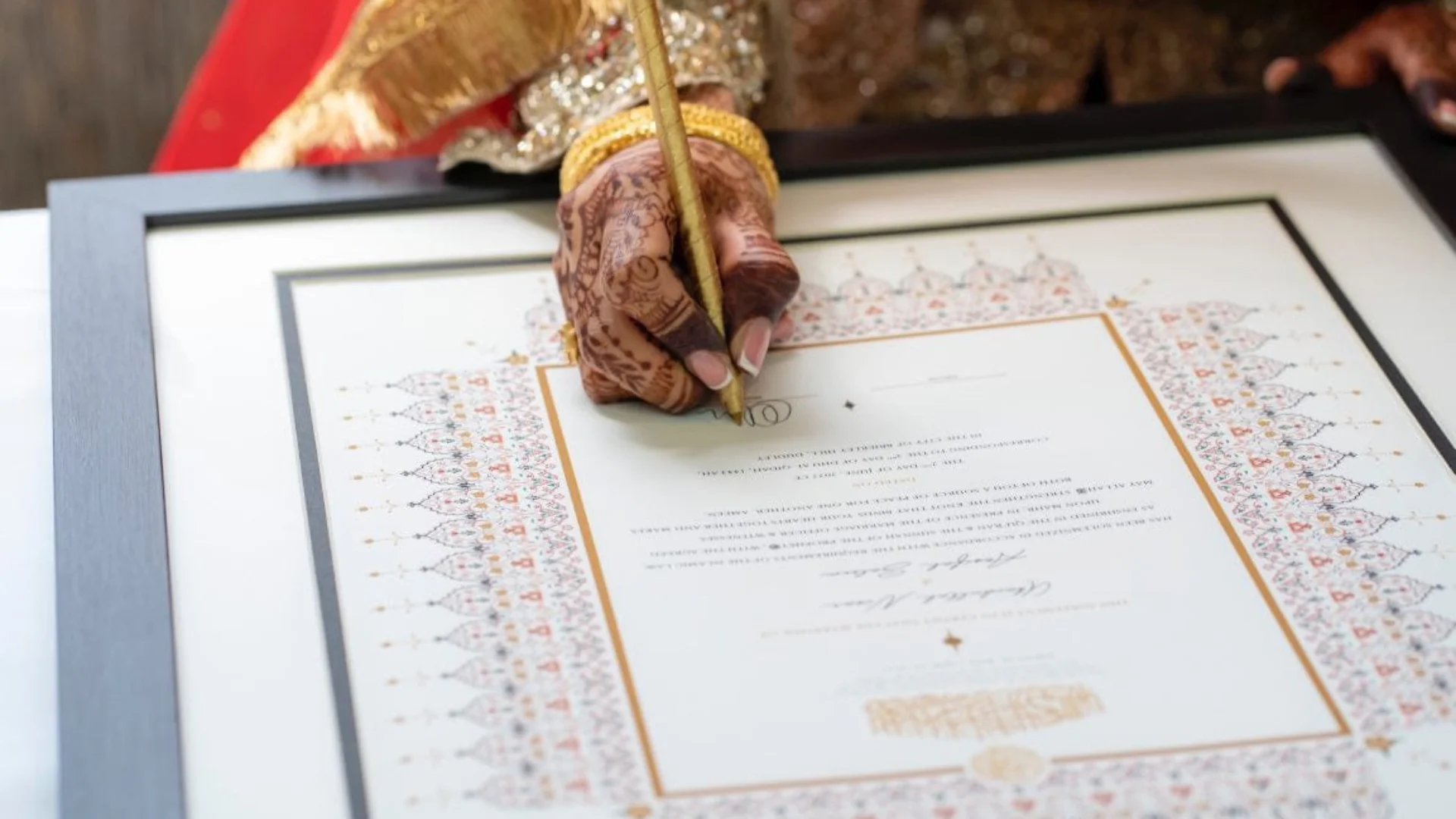
An Islamic marriage is not a sacrament. It is a civil contract. This is the Islamic marriage contract that is referred to as the Nikah, and this is the base of the family life among the Muslims. It stipulates the rights and duties of both spouses. Therefore, Islamic marriage contract is crucial to anyone who gets involved in an Islamic marriage. It is understood and offers legality under the Islamic legal system.
This post will discuss the essence of the Islamic marriage contract. Of its profound meaning we will speak. Its legal aspects will be discussed as well. You will get to know the main aspects that constitute a valid marriage in Islam.
Key Components of the Nikah
There are various fundamental elements of the Islamic marriage contract. Therefore, these are the parts that make the marriage valid and acceptable in the eyes of Islamic law. Thus, all the aspects have a certain role in shaping the marital relationship.
Proposal and Acceptance (Ijab wa Qubul)
The contract starts with an obvious offer of one party. An equally clear acceptance should be given by the other party. It is the verbal accord, or Ijab wa Qubul. So, it is the groom who normally proposes. It is accepted by the bride or her representative. Such an exchange has to occur within one session. It implies also mutual agreement, which is one of the pillars of marriage. Therefore, the contract is not valid without the free and willing consent of both partners.
The Dower (Mahr)
The Mahr is a very important part of the contract. Therefore, this is a compulsory gift of the groom to the bride. It is not a bride price. Therefore, the wife is the sole possessor. She is also free to dispose of it as she pleases. Thus the Mahr is a sign of commitment from the husband. It also gives the wife financial security.
The Mahr value and nature are settled on during the marriage. It may be cash, assets, or even non-material, as teaching a skill. Therefore, the Mahr can be paid upfront. It may also be deferred, which is to be disbursed on demand or at the instance of divorce or death. It is also the right of the wife to be mentioned in the contract.
Witnesses (Shahud)
The witnesses must be valid in the marriage contract. In the Sunni religion, there should be two mature adult men who are Muslims. As an option, there should be one man and two women witnesses. Such witnesses are witnesses to the marriage. Therefore, they attest to the consent between the groom and the bride. In Shia Islam, the presence of witnesses is also suggested but not compulsory for the validity of the contract. With the witnesses, the marriage is also a public announcement, and not a secret affair.
The Guardian (Wali)
Another factor is the role of a guardian or Wali, especially on the part of the bride. A virgin bride must be represented by a male guardian, as it is required in most Sunni schools of law. This is normally her father or her paternal grandfather. The Wali is acting in the best interest of the bride. Hanafi school of thought is an exception. It enables a mature woman to marry herself without the presence of Wali. The role of the guardian is to safeguard the interests of the bride, not coerce her to get married. The consent of the bride is still paramount.

The Significance of the Marriage Contract
Nikah is not just a legal document. It is of tremendous religious and social importance. It is the sole religiously approved mechanism of creating a family and having sanctioned intimate relations. Islam encourages marriage. It considers it a way of attaining emotional and spiritual peace.
The Quran defines marriage as a manifestation of love and mercy between marriage mates. The contract offers a guide to this relationship. It provides a stable family unit. This is the cornerstone of the larger community. It safeguards the rights involved in the couple. It secures the future of their kids and their rights. The contract makes marriage and casual relationships different in that it formalizes the union. It advances the relationship to the level of responsibility and mutual respect.
Legal Stipulations and Aspects.
The Islamic marriage is a contract and as such, may contain a set of conditions or stipulations (shurut). This is because these stipulations enable couples to tailor their agreement. This may be a potent weapon for defending the rights of both spouses, and mostly the wife.
Common Stipulations
A bride is allowed to make conditions in her marriage contract. One of these is usually the requirement that the husband will not marry another wife. One more may be that he will not move her out of her hometown against her will. She is also able to make the condition of her right to work or to get an education. Such stipulations are common in the Hanbali school of law. In case the husband commits them, the wife is allowed in law to divorce. There is a varying opinion between other schools of law regarding the enforceability of these conditions.
Enforceability and Modern Context
The codes of family law in most of the Muslim dominant nations regulate the enforcement of these requirements. This is not the case with Muslims in non-Muslim countries. The marriage contract under Islamic law might not be legally enforceable in civil law. In most instances, most couples undertake a civil marriage registration together with their Nikah. This guarantees them protection under local laws. There are also organizations that are striving to come up with model marriage contracts. These agreements are aimed to be enforceable in the secular legal systems and in a manner that they relieve the tension between the Islamic values and the secular law.
Differentiated Rights and Duties
The traditional Islamic jurisprudence defines gender based rights and responsibilities. The financial provision of the family is the main responsibility of the husband. This involves accommodation, clothing, and overall support. On their part, the main activity of the wife is keeping the house and bringing up. These are the roles that depend on each other. One of the partners failing to discharge their responsibilities may have an impact on their rights. Contemporary understanding and contractual requirements tend to establish a more egalitarian relationship, which are changing the roles of men and women in society.
Conclusion
The Islamic marriage contract is dynamic. It is not an object of dead history. It is a living contract that offers a plan of a dedicated partnership. However, it has a highly structured addressing human relationships with core requirements and customizable specifications. The contract itself is a statement bearing the idea of the presence of a good marriage on the basis of intelligibility, mutual agreement, and responsibilities.
Finally, the contract is a point of departure and not a destination. It preconditions a life of mutual aspirations, admiration and love. The actual achievement of the marriage is not only pegged on the words on the piece of paper, but the willingness of the couple to abide by the spirit of the deal: to create their life based on love, mercy, and faith.


